 Save
Save There's something about the way coconut rice steams that makes you feel like you're cooking somewhere warm and bright, even if it's gray outside your kitchen window. My friend Maya brought me a bowl of this Thai peanut chicken from a pop-up restaurant she'd discovered, and I spent the whole meal trying to reverse-engineer the creamy-spicy sauce and wondering why restaurant food always tastes like it has some secret ingredient you can't quite name. Turns out, it doesn't—it just needs good timing, fresh aromatics, and the kind of attention you give when you're actually cooking for someone you want to impress. This bowl became my answer to those nights when I wanted something that felt special but didn't require hours at the stove.
I made this for my roommate on a random Tuesday evening when she came home looking absolutely defeated by her day, and watching her face change after that first bite was better than any cooking show moment I could manufacture. She asked for the recipe immediately, and then asked again the next week, which is how I knew it had crossed from nice dinner into comfort food territory.
Ingredients
- Jasmine rice: Use the kind that comes in those bags with the jasmine flower on them—it has a gentle floral note that matters here, not the fancy versions that promise something they can't deliver.
- Coconut milk: Full-fat is non-negotiable; the light versions turn watery and sad instead of rich and creamy.
- Chicken thighs or breasts: Thighs stay juicier if you're not obsessive about timing, but either works if you keep your heat medium-high and don't let them sit in the pan forever.
- Soy sauce and fish sauce: These two are your backbone—they create an umami depth that makes people stop and ask what you did.
- Creamy peanut butter: The regular kind from the jar, not the natural stuff that separates, unless you enjoy stirring sauce for five minutes.
- Sriracha: Start with one tablespoon and taste; some bottles are friendlier than others, and you're the only one who knows your heat tolerance.
- Fresh ginger and garlic: Minced or grated, these wake up everything else in the bowl and make the whole kitchen smell like something good is happening.
- Bell pepper, cucumber, and carrots: They stay crisp and bright, which is the whole point—the contrast between warm rice and cool vegetables is what makes people keep eating.
Tired of Takeout? 🥡
Get 10 meals you can make faster than delivery arrives. Seriously.
One email. No spam. Unsubscribe anytime.
Instructions
- Rinse and toast your rice:
- Run cold water over the rice in a fine mesh strainer until the water runs mostly clear, shaking gently—this removes the starchy coating that would otherwise make everything gluey. Some people skip this, but those people are wrong, and their rice knows it.
- Build the coconut rice:
- Combine your rinsed rice with coconut milk, water, and salt in a saucepan and bring it to a boil—you'll see it bubble up and smell almost sweet. Once it boils, cover it, turn the heat down to low, and leave it alone for exactly 15 minutes; any peeking under the lid lets the steam escape and ruins the texture.
- Let it rest:
- After 15 minutes, turn off the heat and keep the lid on for another 10 minutes—this is when the rice finishes cooking gently using its own steam. When you fluff it with a fork, each grain should be separate and tender.
- Marinate the chicken in aromatics:
- Mix soy sauce, fish sauce, lime juice, brown sugar, minced garlic, and ginger together, then add your chicken pieces and toss until everything is coated. Even 10 minutes makes a difference; if you have 20, even better, but don't stress if you're running behind.
- Sear until golden and cooked through:
- Heat oil in a large skillet over medium-high heat until it shimmers, then add the marinated chicken pieces and let them sit for a minute before stirring—this is how they get golden instead of steamed. Cook for 6 to 8 minutes total, stirring occasionally, until the thickest piece is cooked through and the outside has some color.
- Whisk the peanut sauce into existence:
- Combine peanut butter, soy sauce, sriracha, honey, rice vinegar, warm water, ginger, and minced garlic in a bowl and whisk until smooth and creamy. If it looks too thick, add water a tablespoon at a time until it reaches that perfect drizzle consistency.
- Assemble with intention:
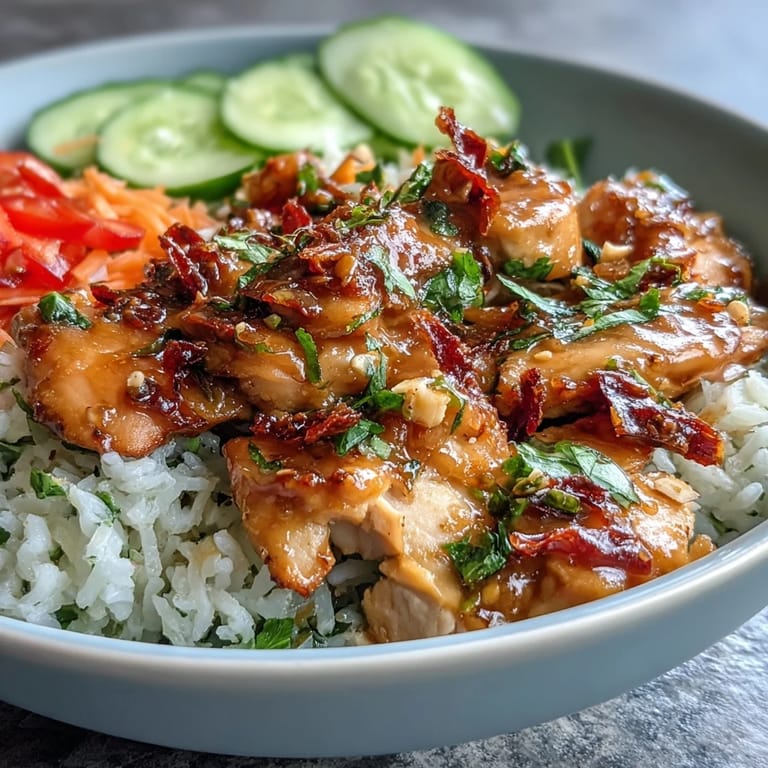
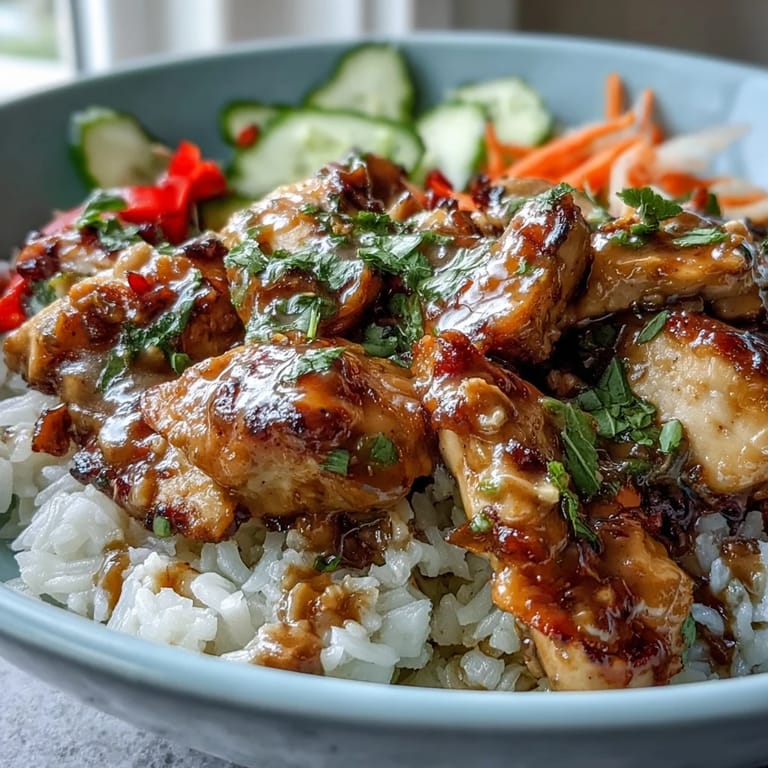
- Divide rice among bowls, then layer on the warm chicken, followed by the raw vegetables arranged in any way that makes you happy. Drizzle generously with peanut sauce, then scatter cilantro, chopped peanuts, green onions, and lime wedges on top for brightness and crunch.
 Save
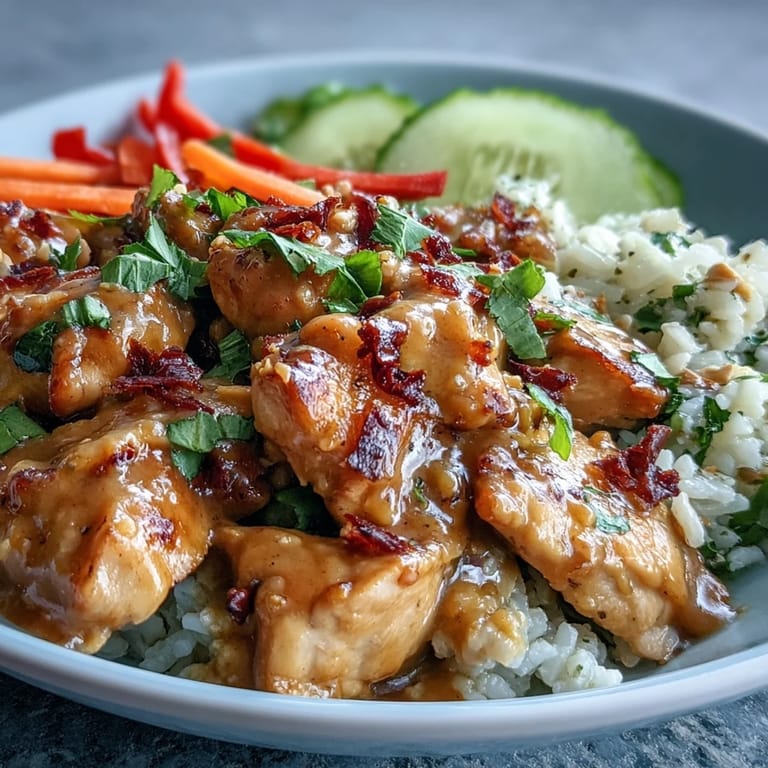
Save There's a moment when you drizzle that peanut sauce over a warm bowl and watch it pool around the chicken and rice, where this stops being dinner and becomes an experience. Every component stays in its own lane but somehow tastes better together, and that's when you understand why people crave this food.
Why the Coconut Rice Matters
Regular rice would be boring here, but coconut rice carries a subtle sweetness and richness that echoes back to the peanut sauce and makes the whole bowl feel connected instead of like separate components thrown together. The first time I skipped the coconut milk and just made regular rice, the bowl lost something intangible but important—it became competent instead of crave-worthy. Since then, I've learned that sometimes the small choices are the ones that turn a good meal into one people actually remember.
Building Flavor Through Layers
The chicken marinade is doing more work than it looks like—soy sauce and fish sauce are building an umami foundation, while lime juice and ginger keep things bright and prevent the whole thing from feeling heavy. I used to just throw chicken in a pan with salt and pepper and wondered why restaurant versions tasted so much more complex, until I realized seasoning in stages was the actual secret. The peanut sauce arrives last and ties everything together, but it's only as good as what you've already prepared.
Vegetables, Temperature, and Texture
The raw vegetables are there on purpose—they provide crunch and coolness against the warm rice and sauce, and they keep the bowl interesting to eat from first bite to last. Cooking them would soften everything into submission, which is fine if you're making a soup but doesn't work here. You can add edamame, red cabbage, snap peas, or anything else that keeps its texture when raw and doesn't taste like punishment to eat.
- Slice everything thinly and roughly the same size so the bowl feels intentional instead of haphazard.
- Keep your vegetables in the fridge until assembly so they stay cold and crisp against the warm components.
- Taste a lime wedge before you squeeze it—old limes are dry and disappointing, and that's not what this bowl deserves.
 Save
Save This bowl has become my reliable answer to the question of what to cook when I want something that tastes like care but doesn't demand hours of my life. Make it once and you'll understand why it earns its place in your regular rotation.
Recipe Questions & Answers
- → Can I make this bowl ahead of time?
Prepare components in advance—marinate chicken overnight, cook rice up to 2 days ahead, and whisk sauce when ready. Assemble bowls just before serving for best texture and freshness.
- → What protein alternatives work well?
Firm tofu or tempeh make excellent vegetarian substitutes. Press tofu first for better texture, then marinate and cook exactly as you would the chicken. Shrimp also works beautifully with these flavors.
- → How can I adjust the spice level?
Start with less sriracha in the peanut sauce and taste as you go. For mild flavor, use 1 teaspoon or omit entirely. For extra heat, add fresh chili slices to the garnish or increase sriracha to 2 tablespoons.
- → Is the peanut sauce gluten-free?
The sauce becomes gluten-free when using tamari instead of soy sauce. Check your sriracha brand as well—many are gluten-free, but verify the label if avoiding gluten strictly.
- → What other vegetables can I add?
Shredded red cabbage, snap peas, mung bean sprouts, or steamed broccoli all complement these flavors. Use whatever crisp vegetables you have on hand for texture and color variation.
- → Can I freeze leftovers?
Freeze the cooked chicken and rice separately for up to 3 months. The peanut sauce keeps well refrigerated for a week. Avoid freezing assembled bowls as vegetables lose their crisp texture.