 Save
Save There's something about the smell of a ham hock breaking down in broth that stops me mid-task every single time. Years ago, my neighbor casually mentioned she'd been simmering one since dawn, and I wandered over around lunchtime to find her kitchen wrapped in this warm, smoky fog that felt like a hug. She ladled out a bowl thick with creamy beans and handed me a wedge of golden cornbread still steaming from the oven, and I understood immediately why this soup has been feeding people through winters and hard weeks for generations.
I made this for my dad after he mentioned, almost offhandedly, that he missed the kind of food that stuck with you. Watching him break off chunks of cornbread to soak into the broth, the way his shoulders seemed to relax with each spoonful—that's when I realized this recipe wasn't really about technique or ingredients. It was about creating space for someone to feel taken care of.
Ingredients
- Smoked ham hock (about 1 lb / 450 g): This is your flavor anchor, packed with collagen that transforms the broth into something velvety and rich.
- Dried white beans (1 lb / 450 g), soaked overnight: Soaking matters more than you'd think—it shortens cooking time and lets them cook evenly without splitting.
- Chicken or vegetable broth (8 cups / 2 L), low-sodium: Low-sodium lets you control the final salt level and prevents the soup from becoming aggressively salty as it reduces.
- Yellow onion, carrots, celery (diced): This trio is your flavor foundation; dicing them small means they soften completely and nearly disappear into the broth.
- Garlic cloves (3, minced): Mince it fine so it disperses throughout the soup rather than sitting in sharp little chunks.
- Bay leaves (2) and dried thyme (1 tsp): These herbs are gentle enough to let the ham shine but add depth that plain broth never could.
- Smoked paprika (1/2 tsp): A small amount intensifies the smoky feeling without tasting like a spice jar.
- Olive oil (2 tbsp): Use it for sautéing the aromatics—it creates a flavor base that the broth will cling to.
- Yellow cornmeal (1 cup / 150 g): This is what gives cornbread its texture and slight grittiness that people crave.
- All-purpose flour (1 cup / 125 g): Combined with cornmeal, it provides structure without making the cornbread dense.
- Granulated sugar (1/4 cup / 50 g): This amount adds subtle sweetness and helps with browning during baking.
- Baking powder (1 tbsp): It's your rising agent; make sure yours is fresh or the cornbread won't puff properly.
- Whole milk (1 cup / 240 ml) and eggs (2 large): These create a tender crumb; cold milk would tighten the batter, so let it sit out briefly.
- Unsalted butter (1/4 cup / 60 g), melted: Melted and slightly cooled so it doesn't cook the eggs when you combine wet and dry ingredients.
Tired of Takeout? 🥡
Get 10 meals you can make faster than delivery arrives. Seriously.
One email. No spam. Unsubscribe anytime.
Instructions
- Sauté your aromatics:
- Heat olive oil in your Dutch oven over medium heat, then add the diced onion, carrots, and celery. Let them soften for about 5 minutes, stirring occasionally until they've begun to release their sweetness and the kitchen smells bright and alive. This foundation matters because you're building layers of flavor that will echo through the entire pot.
- Coax out the garlic:
- Add your minced garlic and stir constantly for just 1 minute—you want it fragrant but not browned, which would turn it bitter. The moment it fills the air with that unmistakable smell, you're done.
- Combine everything for the simmer:
- Add your drained soaked beans, ham hock, bay leaves, thyme, pepper, and paprika, then pour in all the broth. Bring it to a boil so you see aggressive bubbles breaking the surface, then immediately reduce the heat to low and cover partially with a lid.
- Let time do the work:
- Simmer for about 2 hours, stirring occasionally so nothing settles on the bottom and sticks. The beans will gradually soften, the ham hock will start falling apart, and the broth will deepen in color. You'll know it's ready when you can easily break a bean between your fingers.
- Shred and return the ham:
- Remove the ham hock from the pot and set it on a cutting board to cool slightly. Pick the meat away from the bone and skin, discarding anything tough, then tear the meat into small pieces and return it to the pot. Remove and discard the bay leaves while you're at it.
- Taste and adjust:
- Add salt gradually, tasting as you go—the ham hock has already contributed saltiness, so you're looking for balance, not seasoning from scratch. If you want the soup thicker, leave it uncovered for the last 10 to 15 minutes and let some liquid evaporate.
- Finish with green:
- Stir in fresh chopped parsley just before serving so it stays bright and doesn't fade into the warmth.
- Prepare the cornbread pans:
- While the soup simmers, preheat your oven to 400°F (200°C) and grease an 8-inch square baking dish with a light hand—you just need enough so it doesn't stick.
- Mix the dry team:
- Whisk together cornmeal, flour, sugar, baking powder, and salt in a large bowl, making sure the baking powder is distributed evenly so you don't end up with pockets of bitter flavor.
- Combine wet and dry gently:
- In a separate bowl, whisk milk, eggs, and cooled melted butter together, then pour this mixture into your dry ingredients and stir until just combined. The key is restraint—overmixing develops gluten and makes cornbread tough and dense rather than tender and crumbly.
- Bake until golden:
- Pour batter into your prepared dish and bake for 20 to 25 minutes until the top is golden brown and a toothpick inserted in the center comes out clean. The edges will start pulling away from the sides of the dish slightly when it's done.
- Cool before slicing:
- Let the cornbread cool for a few minutes so the structure sets, but slice it while it's still warm enough to steam slightly when you cut into it.
- Bring it together:
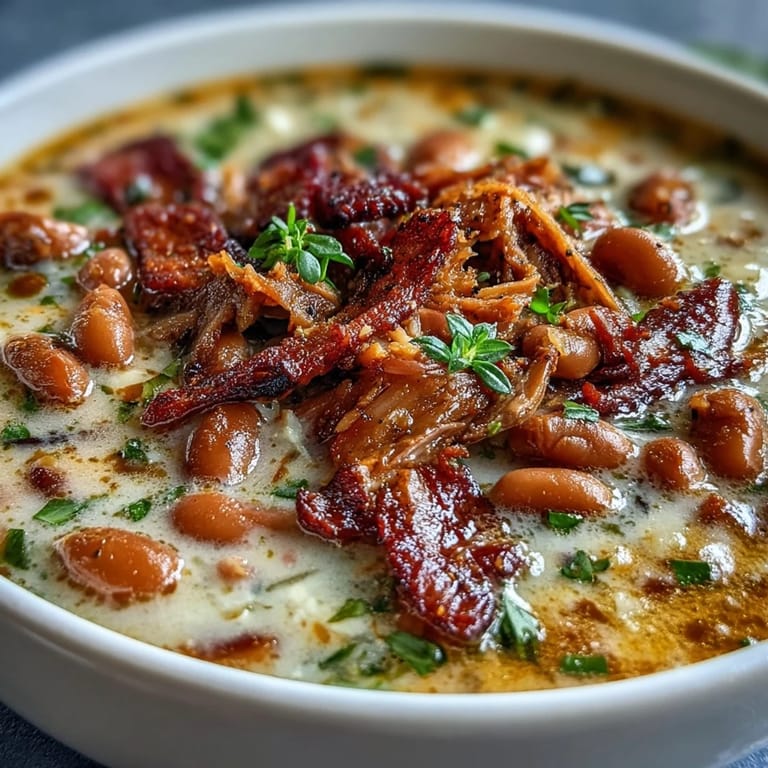
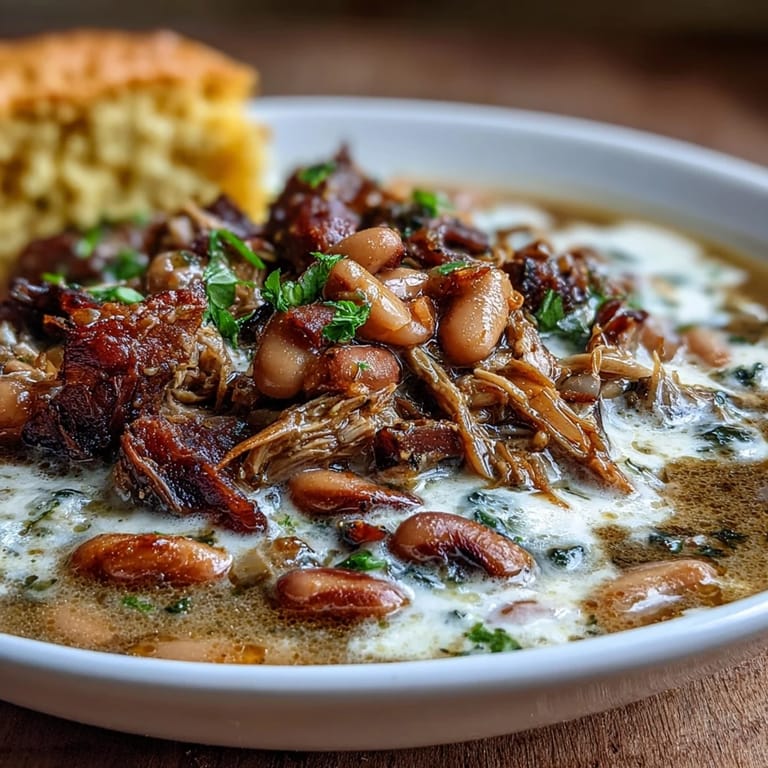
- Ladle the hot soup into bowls and serve with a wedge of warm cornbread on the side or even crumbled into the bowl, letting it soak up the broth.
 Save
Save My favorite version of this memory is when my sister brought her daughter over on a cold Thursday night, and the three of us sat at the kitchen table with bowls steaming between us. My niece dunked cornbread into the soup like it was an art form, and my sister caught my eye with this look of quiet gratitude that said everything about what good food really means.
Why This Soup Lasts
There's a reason ham hock and bean soup shows up in so many family traditions—it's almost impossible to mess up, it tastes better the next day, and it fills your house with a smell that makes people want to linger. The long cook time means you're not actually working; you're just checking in now and then, which makes this perfect for days when you want something satisfying but don't want to fuss.
Building Flavor Layers
This soup teaches you something quiet about cooking: time and gentle heat can transform tough, inexpensive ingredients into something luxurious. The ham hock starts out looking almost unappetizing, but hours in the pot turn it into the reason your broth tastes complex and rich. By the time you're serving bowls, nobody's thinking about the individual components—they're just experiencing the whole, which is exactly what you want.
Cornbread as Counterpoint
Cornbread next to this soup isn't just a side; it's a textural conversation. The soup is smooth and luxurious, so cornbread's slight crumb and hint of sweetness cuts through and keeps each spoonful interesting. People often ask if they can serve cornbread with other soups, and the answer is yes, but the combination here feels almost inevitable—warm, comforting, and deeply satisfying in a way that feels almost old-fashioned.
- If your cornbread is baking while the soup simmers, set a timer so you don't lose track of either one.
- Leftover cornbread gets crispy when reheated in a warm oven for 5 to 10 minutes.
- This soup actually improves after a day in the fridge as flavors meld, so making it ahead is not just allowed but encouraged.
 Save
Save This is the kind of recipe that gets better every time you make it because you learn where you like it saltier or more savory, whether you want more herbs or less. Cook it once and it becomes yours.
Recipe Questions & Answers
- → How long should the ham hock simmer for best flavor?
Simmer the ham hock for approximately 2 hours until the meat is tender and falling apart, allowing flavors to fully develop.
- → Can I use a different type of beans for the soup?
Yes, navy or Great Northern beans work well as they absorb flavors and become tender during the long simmer.
- → What can I substitute for ham hock if avoiding pork?
Smoked turkey leg can be used as a flavorful alternative that still imparts a smoky depth to the stew.
- → How do I achieve a moist and tender cornbread?
Mix wet and dry ingredients just until combined to avoid overmixing, and bake until golden with a clean toothpick test.
- → Can vegetables like kale be added to enhance nutrition?
Adding chopped kale or spinach during the last 10 minutes of simmering provides extra greens without overpowering the flavors.