 Save
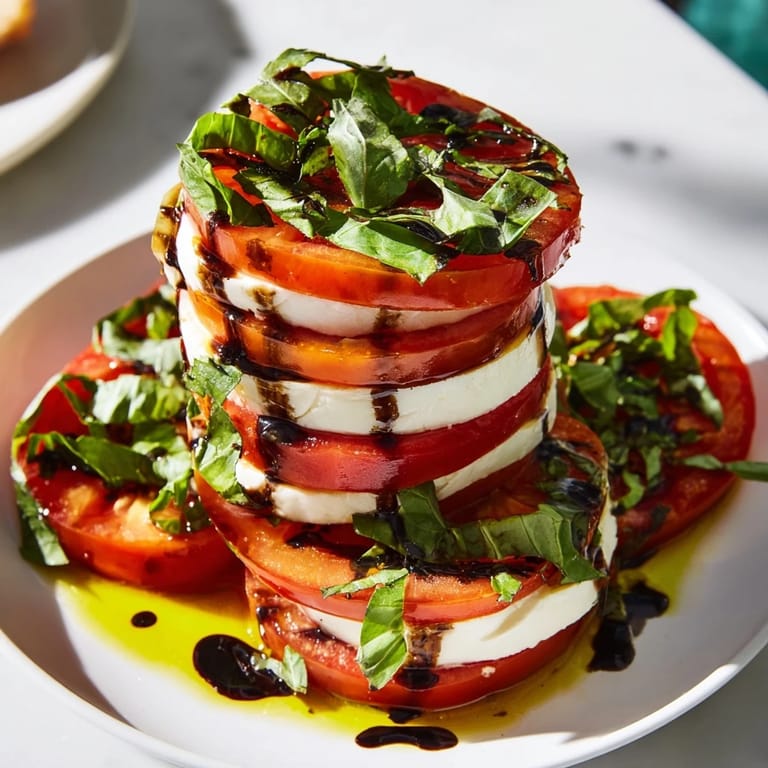
Save I discovered these towering stacks at a small trattoria outside Florence on a sweltering July afternoon. The waiter set down a plate, and I was instantly mesmerized by how something so simple—tomato, mozzarella, basil—could look like edible architecture. That evening, I tried to recreate it in my tiny Roman apartment kitchen, and somehow, the magic translated. Now whenever I need to impress without stress, this is my answer.
My neighbor once caught me arranging these on a platter at midnight before a dinner party, squinting at my phone for inspiration. She laughed and said, 'That's not cooking, that's stacking.' She was right, but the compliments I got that night proved stacking could be an art form. Sometimes the best meals are the ones where you stop overthinking and just let good ingredients speak.
Ingredients
- Fresh ripe tomatoes: Look for ones that smell fragrant at the stem—that's your signal they'll taste like something, not just fill a plate.
- Fresh mozzarella cheese: The softer, fresher kind that comes in liquid, not the rubbery brick in plastic. This is non-negotiable.
- Fresh basil leaves: Tear them gently or leave whole. Cutting them bruises the leaves and turns them dark, which nobody wants to see.
- Extra-virgin olive oil: Use one you'd actually want to taste on its own—this is not the time for the budget bottle.
- Balsamic glaze: The thick, glossy kind that drapes like syrup, not the thin vinegar that runs everywhere.
- Sea salt and freshly ground black pepper: These aren't afterthoughts; they're what wake everything up.
Tired of Takeout? 🥡
Get 10 meals you can make faster than delivery arrives. Seriously.
One email. No spam. Unsubscribe anytime.
Instructions
- Slice with intention:
- Cut your tomatoes and mozzarella into 1 cm thick rounds—uniform slices are your friend here because they stack without sliding. A sharp knife makes all the difference; a dull one will squeeze and bruise the tomato.
- Prepare your basil:
- Wash the leaves gently and pat them completely dry with paper towels. Any lingering water will make your pillars weep.
- Build from the bottom up:
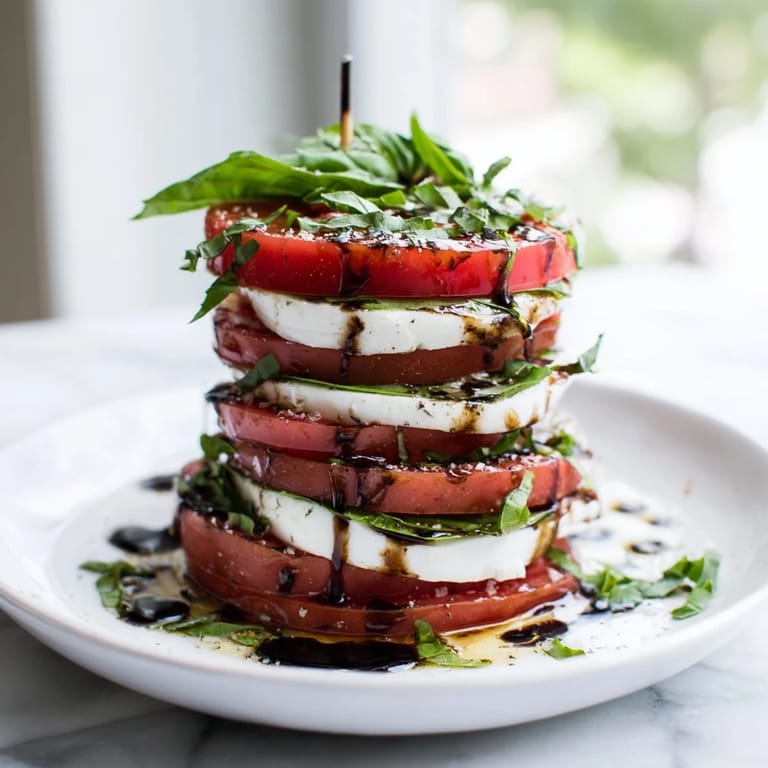
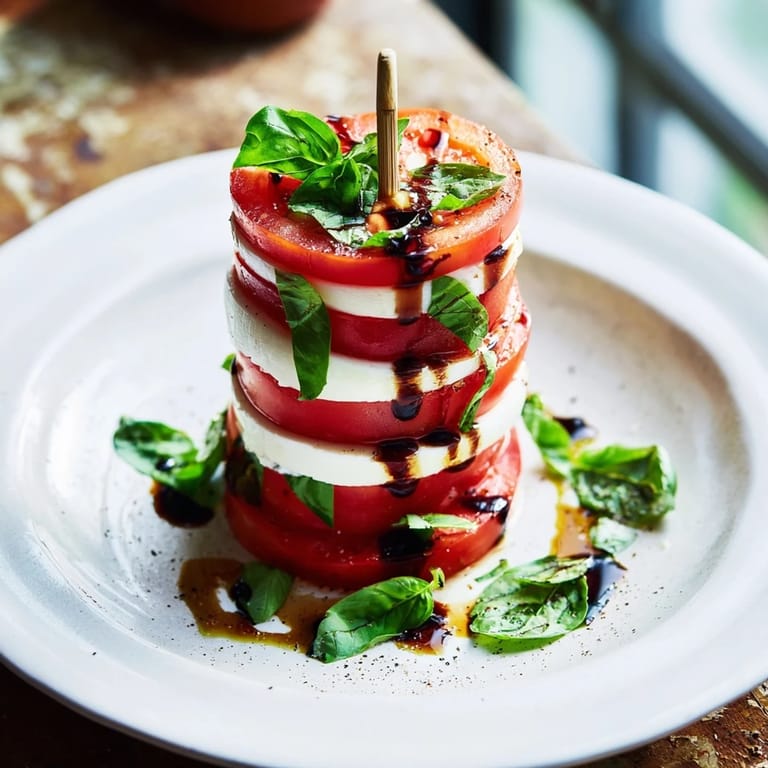
- On your serving platter, lay down a tomato slice like a foundation. Top it with mozzarella, then a basil leaf. Stack again—tomato, mozzarella, basil—until you've got 3 or 4 layers reaching toward the sky.
- Secure your structure:
- Push a long toothpick or bamboo skewer straight down through the center of each stack. It's like giving the tower a spine, keeping everything where it belongs.
- Finish with flair:
- Drizzle olive oil around the base and across the top, then add balsamic glaze in thin streams. Season generously with sea salt and pepper—don't be shy.
- Serve immediately:
- These are best eaten fresh, while the tomato is still cool and the mozzarella hasn't started to soften into itself.
 Save
Save I'll never forget the moment my partner bit into one of these and closed their eyes like they'd just tasted something they needed to remember. No complicated techniques, no fancy equipment—just good ingredients arranged with a little care. That's when I understood why this simple dish has lasted through centuries of Italian cooking.
The Secret to Perfect Stacks
The pillars look deceptively elegant, but their success depends entirely on even slicing and choosing tomatoes that are ripe but still firm enough to hold their shape. Overripe tomatoes will collapse under the weight of the mozzarella, so look for ones that have a slight give when you squeeze gently, not ones that feel mushy. The toothpick is your structural secret—it's not cheating, it's engineering.
Wine and Timing Pairings
These are perfect as the first course when you want to set a refined, unhurried tone. Pour a chilled Pinot Grigio or Vermentino alongside—something crisp that echoes the freshness on the plate. Serve these immediately after assembly; they're at their best within the first 20 minutes, when everything is cool and the textures haven't started to blur together.
Variations and Personal Touches
Once you've made these the traditional way, you'll start seeing possibilities everywhere. Try heirloom tomatoes for a rainbow of colors on the platter, or add a thin slice of prosciutto between layers for something less strictly vegetarian. A tiny pinch of dried oregano or a whisper of garlic powder can shift the whole flavor without overwhelming the delicate balance. Small changes make these feel personal instead of copied.
- Heirloom tomatoes create a stunning visual with red, orange, and yellow tones that regular tomatoes can't match.
- A light dusting of flaky sea salt on top adds a textural surprise and extra seasoning impact.
- Let your mozzarella sit out for five minutes so it's cool but not cold—it tastes creamier that way.
 Save
Save This dish proved to me that cooking doesn't always mean complexity or hours at the stove. Sometimes the most memorable meals are the ones where you let the ingredients do the talking. Make these when you want to feel like you've done something beautiful, because you will have.
Recipe Questions & Answers
- → What type of tomatoes work best for layering?
Medium ripe tomatoes with firm flesh work best to hold the stack shape while providing juicy freshness.
- → Can I use different cheese instead of mozzarella?
Fresh mozzarella’s creamy texture and mild flavor complement the tomato and basil perfectly, but burrata or bocconcini can be good alternatives.
- → How should I assemble the stacks for stability?
Layer tomato, mozzarella, and basil slices evenly, then insert a long toothpick or bamboo skewer vertically through the center to keep layers secure.
- → Are there seasoning tips to enhance the flavors?
A light sprinkle of flaky sea salt and freshly ground black pepper intensifies the natural flavors, while dried oregano adds an optional herbal note.
- → What pairs well with this appetizer?
It pairs beautifully with a crisp Italian white wine such as Pinot Grigio, balancing the fresh and creamy elements.