 Save
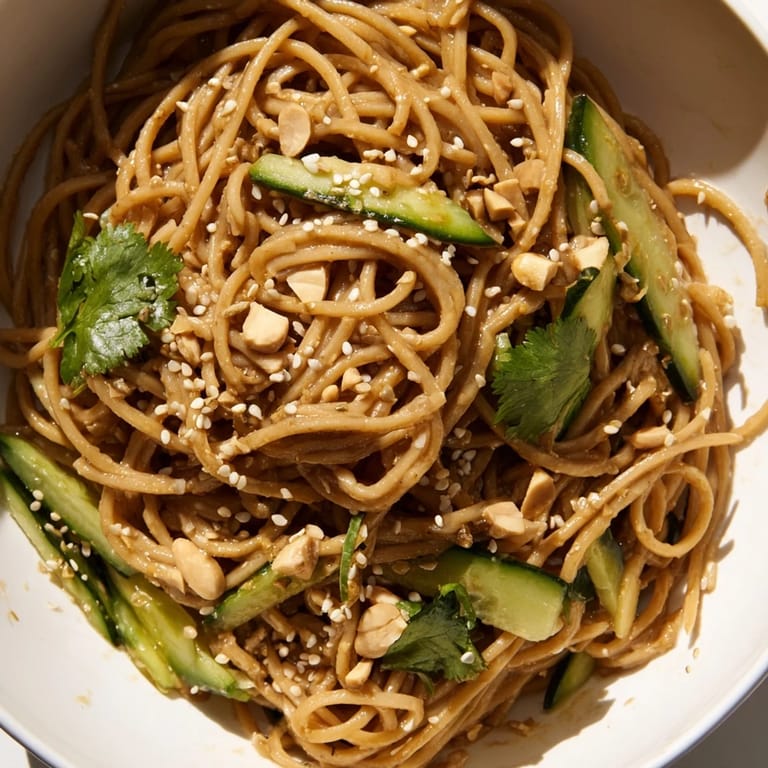
Save I was craving something cold and punchy on a sticky afternoon when I remembered a noodle dish I'd had at a tiny lunch counter years ago. The contrast of slippery noodles, cool cucumber, and that sharp sesame heat stuck with me. I threw together what I had in the pantry, and the result was so good I made it twice that week. It's become my go-to when I want flavor without turning on the oven.
The first time I served this at a potluck, I watched someone go back for thirds. They asked if I'd been to culinary school, and I laughed because I'd literally made it up an hour before leaving. That's the magic of this salad: it feels special, but it's just smart flavor layering and a little chill time in the fridge. Now I bring it everywhere, and it always disappears first.
Ingredients
- Dried wheat noodles or soba noodles (250 g): Soba adds a nutty depth, but any wheat noodle works beautifully as long as you rinse it well after cooking to stop the starch from clumping.
- Toasted sesame oil (3 tbsp): This is the soul of the dressing, rich and aromatic, so don't skimp or substitute with plain sesame oil.
- Soy sauce (2 tbsp): Use a good quality soy sauce for clean, salty umami that balances the richness of the sesame.
- Rice vinegar (1½ tbsp): It adds brightness without the sharpness of white vinegar, keeping everything smooth and rounded.
- Chili oil (1 tbsp): Adjust this to your heat tolerance, but don't skip it entirely because it adds complexity beyond just spice.
- Smooth peanut butter (1 tbsp, optional): This makes the dressing creamy and slightly sweet, turning it into something almost sauce-like.
- Sugar or honey (1 tsp): A little sweetness balances the salt and heat, rounding out the flavor profile perfectly.
- Garlic clove (1, finely grated): Fresh garlic gives a sharp bite that mellows as it sits in the dressing.
- Freshly grated ginger (1 tsp): Ginger adds a clean, zingy warmth that cuts through the richness beautifully.
- Cucumber (1 medium, julienned or thinly sliced): This brings crunch and coolness, refreshing every bite and balancing the bold dressing.
- Spring onions (2, thinly sliced): They add a mild, grassy sharpness that brightens the whole dish without overpowering.
- Toasted sesame seeds (2 tbsp): These add nutty crunch and visual appeal, so toast them yourself if you can for maximum flavor.
- Fresh cilantro leaves (¼ cup, chopped): Cilantro brings a fresh, herbal lift that makes the salad feel vibrant and alive.
- Roasted peanuts (¼ cup, roughly chopped, optional): They add crunch and richness, making the salad more substantial and satisfying.
Tired of Takeout? 🥡
Get 10 meals you can make faster than delivery arrives. Seriously.
One email. No spam. Unsubscribe anytime.
Instructions
- Cook and Cool the Noodles:
- Boil the noodles according to the package directions, then drain and rinse them under cold water until they're completely cool to the touch. This stops the cooking and washes away excess starch so they don't clump together.
- Whisk the Dressing:
- In a large bowl, combine sesame oil, soy sauce, rice vinegar, chili oil, peanut butter (if using), sugar, garlic, and ginger, whisking until the mixture is smooth and emulsified. Taste it now and adjust the heat or sweetness to your liking.
- Toss the Noodles:
- Add the cooled noodles to the bowl and toss them well with tongs or your hands until every strand is glossy and coated. The noodles will soak up the dressing as they sit, so don't be shy with it.
- Add the Vegetables:
- Toss in the cucumber, spring onions, and half of the sesame seeds, cilantro, and peanuts, mixing gently so everything is evenly distributed. The vegetables should stay crisp and bright against the soft noodles.
- Serve and Garnish:
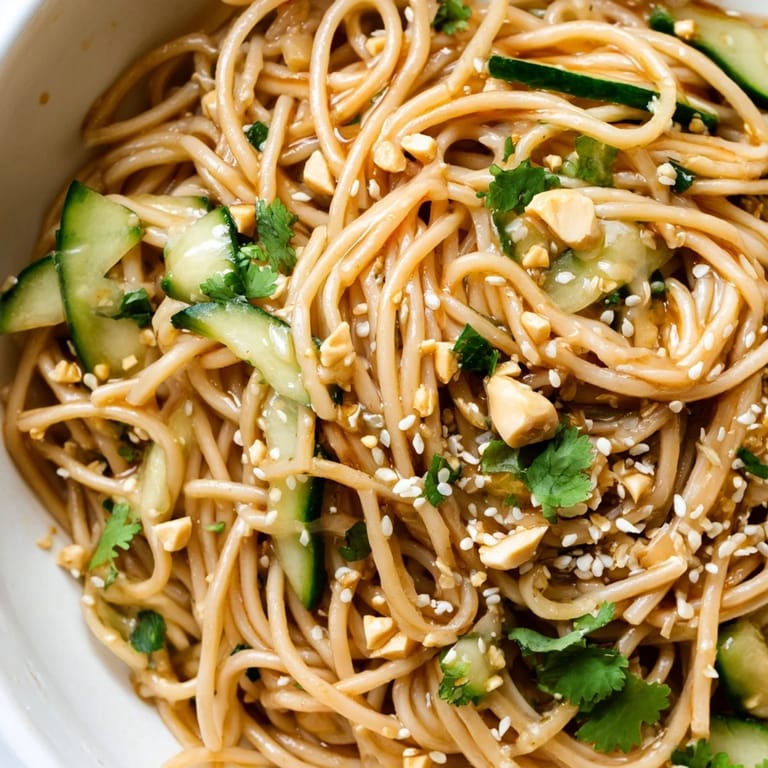
- Transfer the salad to a serving platter or individual bowls and sprinkle the remaining sesame seeds, cilantro, and peanuts on top. Serve it right away or let it chill in the fridge for an hour to let the flavors meld together.
 Save
Save One summer evening, I packed this salad into a container and took it to the park with a friend. We sat on a blanket, ate straight from the bowl with chopsticks, and watched the sun go down. It tasted even better outdoors, and I realized this dish doesn't just feed you, it creates little pockets of joy. That's when I stopped thinking of it as just a recipe and started seeing it as a ritual.
Adjusting the Heat
I learned the hard way that chili oil varies wildly in intensity, so start with less and build up. You can always add more heat, but you can't take it back once the noodles are coated. If you accidentally go overboard, a spoonful of extra peanut butter or a squeeze of lime juice will tame the fire without losing the flavor. Keep a small dish of plain noodles on standby if you're serving people with different spice tolerances.
Making It a Meal
This salad is satisfying on its own, but adding protein turns it into something hearty. I've tossed in shredded rotisserie chicken, crispy tofu cubes, or even leftover grilled shrimp, and it always works. If you're vegetarian, marinated tempeh or a soft-boiled egg on top adds richness and makes it feel more complete. The key is to add your protein at the end so it doesn't get soggy or lose its texture.
Storage and Serving Tips
This salad keeps well in the fridge for up to two days, though the cucumbers may release a bit of water. I like to store the garnishes separately and add them fresh just before eating so everything stays crunchy. If the noodles absorb too much dressing overnight, a quick splash of sesame oil and soy sauce brings them back to life.
- Let the salad sit for at least 10 minutes before serving so the flavors have time to marry.
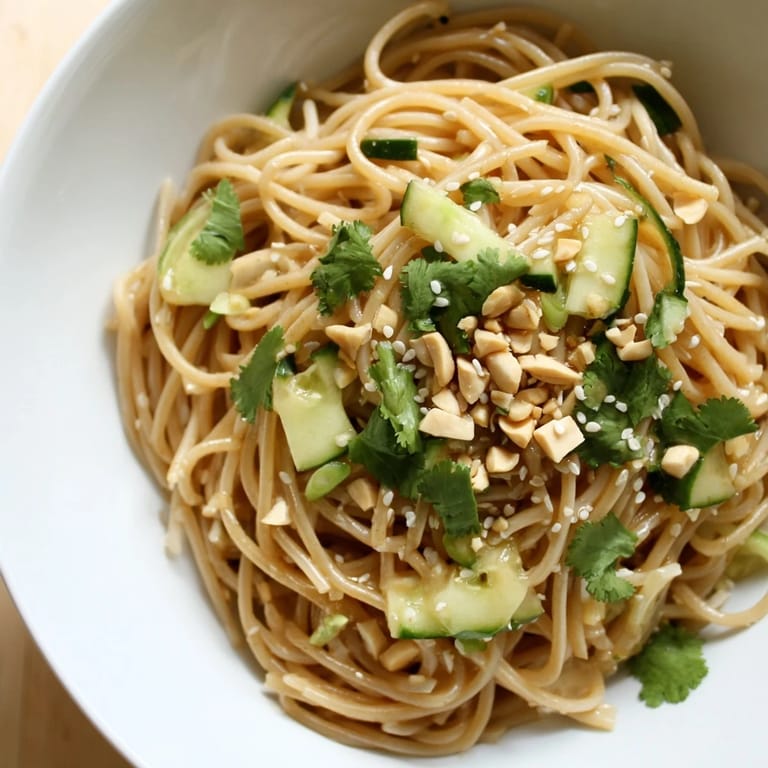
- Serve it in a wide, shallow bowl so you can see all the colorful toppings and textures.
- Pair it with iced green tea or a cold beer for the ultimate refreshing combo.
 Save
Save This salad has saved me on countless busy weeknights and lazy weekends. It's proof that simple ingredients, when treated right, can create something you'll crave over and over again.
Recipe Questions & Answers
- → Can I make this ahead of time?
Yes, this dish is excellent for meal prep. Cook and chill the noodles, prepare the dressing, and store vegetables separately. Combine 2-3 hours before serving to prevent the noodles from absorbing too much dressing and becoming soggy. Add fresh toppings just before serving.
- → How do I adjust the spice level?
Start with 1 tbsp of chili oil and taste as you go. Add more chili oil, fresh red chili flakes, or thin sliced fresh chilies for extra heat. For less spice, reduce chili oil and focus on the sesame and soy flavors for depth.
- → What noodles work best?
Wheat noodles and soba noodles both work wonderfully and cook in similar times. Rice noodles are an excellent gluten-free alternative. Egg noodles also work but absorb dressing quickly. Avoid instant ramen as it tends to become mushy.
- → Can I add protein to this?
Absolutely. Shredded rotisserie chicken, crispy tofu, grilled shrimp, or edamame all pair beautifully. Cook and cool protein separately, then toss with the noodles and dressing for best results. This keeps the dish filling and substantial.
- → Is this dish vegetarian and vegan-friendly?
It's naturally vegetarian. To make it vegan, ensure your soy sauce is certified vegan and replace the optional peanut butter with tahini or another plant-based alternative. All vegetables and sesame elements are completely plant-based.
- → What can I substitute for peanut butter?
Tahini creates a similar creamy texture with a subtle nutty flavor. Almond butter or sunflower seed butter also work well. If avoiding nuts entirely, use tahini or simply omit it—the sesame oil already provides richness and depth.