 Save
Save Last winter, I was frantically packing lunches at 6 a.m., and my partner suggested we try something different—layering soup ingredients in jars the night before. The idea seemed odd at first, but the moment I poured hot water into that first jar and watched everything bloom and meld together, I understood. Minestrone in a jar became our secret weapon for those chaotic weeks when cooking felt impossible but eating well didn't have to be. Now it sits in my fridge like edible insurance, waiting for busy days when I need something warm, filling, and completely ready to go.
I brought these jars to my office once, and my coworker asked if I was meal prepping for a cookbook photoshoot. When I explained it was just minestrone ready to heat, she wanted the recipe immediately. Watching someone else experience that moment of realization—that you can actually engineer convenience without sacrificing real food—reminded me why I love this recipe. It's practical magic, the kind that makes people pause and reconsider what they thought was possible in their own kitchens.
Ingredients
- Small pasta (ditalini, elbow macaroni, or mini shells): Use a small shape so it doesn't dominate the jar or cook unevenly; larger pasta gets mushy waiting at the bottom.
- Dried red lentils: These soften quickly without pre-soaking and add protein and earthiness that anchors the whole soup.
- Canned cannellini beans: Drain and rinse them well to remove the starchy liquid that clouds the broth.
- Zucchini, carrots, and celery: Dice everything the same small size so it cooks evenly and layers neatly without gaps.
- Frozen green peas: They thaw perfectly in hot water and burst with sweetness that balances the earthier vegetables.
- Baby spinach: Chop it finely so it disperses throughout the jar instead of clumping at the top.
- Sun-dried tomatoes: Oil-packed ones have more flavor than the dry kind; chop them small so they release their concentrated taste into the broth.
- Tomato paste: This is your secret weapon for depth; don't skip it or dilute it with water.
- Dried Italian herbs, garlic powder, and chili flakes: Layer them dry so they're evenly distributed and infuse slowly as the water heats.
- Vegetable bouillon cube: Crumble it into the jar so it dissolves completely and seasons every spoonful.
- Boiling water: Use truly hot water so the ingredients cook properly in the sitting time and the jar heats through thoroughly.
Tired of Takeout? 🥡
Get 10 meals you can make faster than delivery arrives. Seriously.
One email. No spam. Unsubscribe anytime.
Instructions
- Set up your jars and prep your vegetables:
- Wash four quart-size mason jars and dry them completely. Dice your carrots, celery, and zucchini into small, consistent pieces—about the size of peas—so everything cooks evenly and layers smoothly without air pockets.
- Build the soup layers from bottom to top:
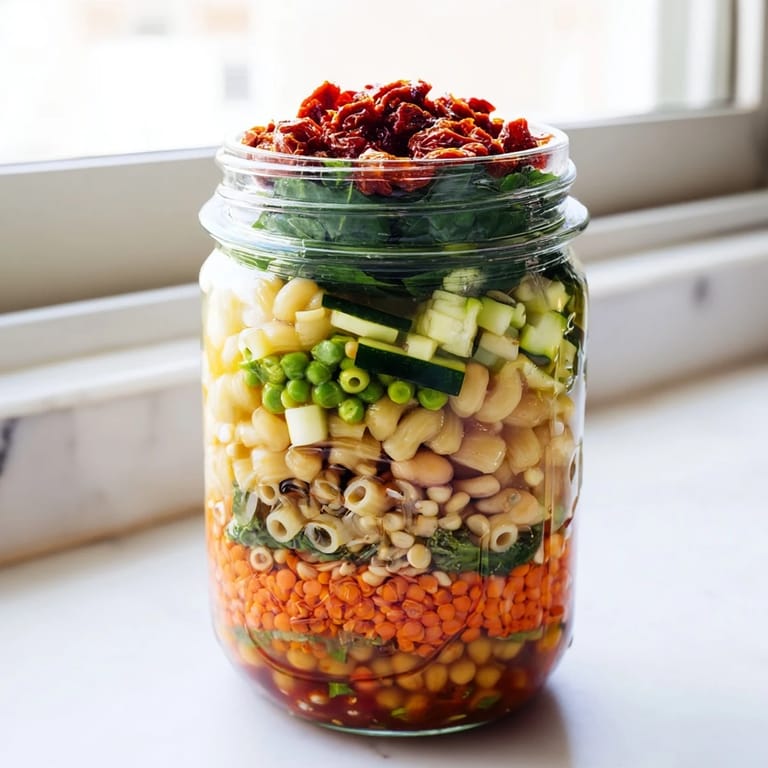
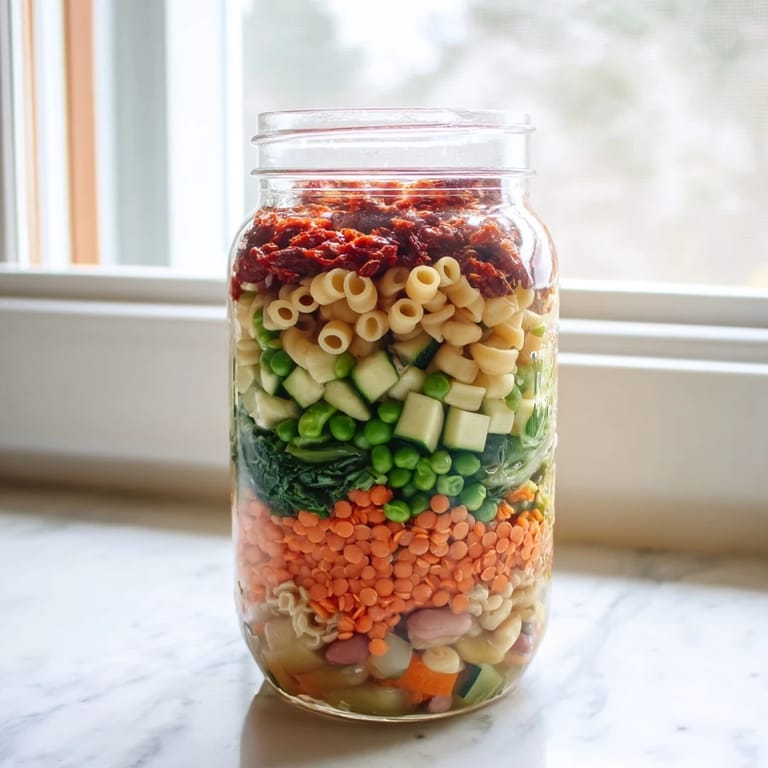
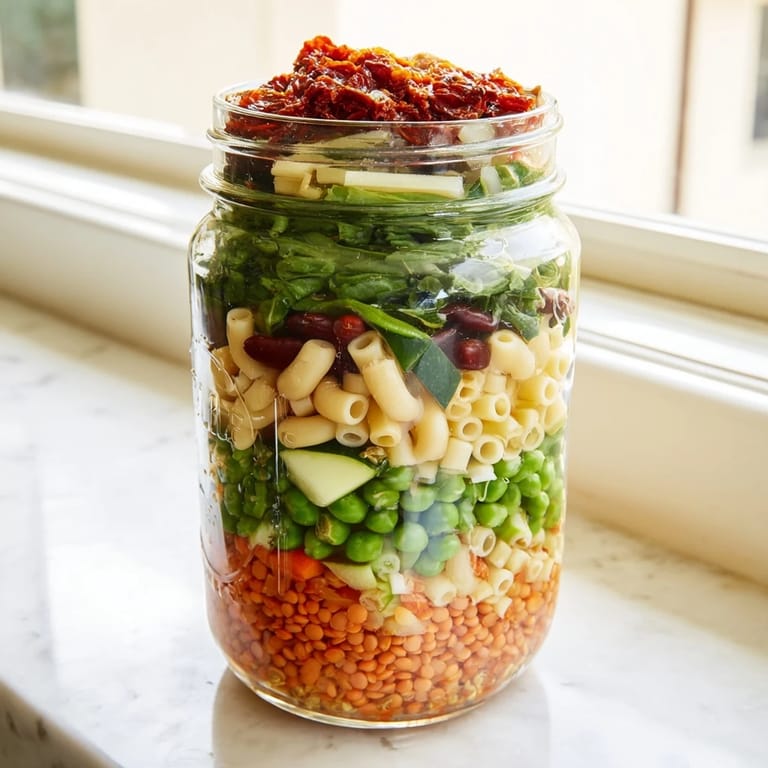
- Start with the small pasta at the jar bottom, then layer in order: red lentils, cannellini beans, carrots, celery, zucchini, frozen peas, chopped spinach, sun-dried tomatoes, tomato paste (dollop it gently), then sprinkle the dried herbs, garlic powder, chili flakes, salt, pepper, and crumbled bouillon cube on top. Press down gently after each section to compact without crushing.
- Seal and refrigerate your jars:
- Screw the lids on tightly and place the jars in the coldest part of your refrigerator for up to 4 days. The layers will seem dry now, but they're waiting for their moment.
- Heat and rehydrate when hunger strikes:
- Remove a jar from the fridge and carefully pour 2 cups of boiling water over the top, stirring well to ensure the bouillon dissolves and everything gets wet. If you prefer, screw the lid back on (using a plastic lid if you have one, not the metal band alone) and shake gently to mix everything.
- Let it sit and come together:
- Wait 10 to 15 minutes for the pasta to soften and the vegetables to turn tender, or microwave the open jar for 3 to 4 minutes, stirring halfway through. The flavors meld into something warm and complete as you wait.
- Taste, season, and serve:
- Give it a final stir, add salt and pepper if needed, and top with grated Parmesan if you want richness. Serve while it's steaming hot.
 Save
Save My daughter asked me one afternoon why I wasn't making "real" soup anymore, and I realized she thought the jar version was somehow less legitimate. When I handed her a warm bowl and watched her discover that it tasted every bit as good as the stovetop version—maybe even better because it was hers to grab without asking—something clicked. This recipe taught me that convenience and care aren't opposites; sometimes they're the same thing.
The Genius of Layering
Layering isn't just pretty; it's structural. The heavier ingredients settle at the bottom where they have time to soften slowly, while the delicate spinach floats near the top and wilts gently in the residual heat. The pasta stays distinct and toothsome instead of disintegrating into mush because it's separated from the wettest ingredients until the moment you add water. Think of it like building a sandwich in reverse—each layer has a job, and they work together to create something that's balanced and satisfying.
Storage and Make-Ahead Magic
Four days in the refrigerator is genuinely how long these jars last in my house before they're gone, but you need to know they stay better the first two days. After that, the pasta starts absorbing ambient moisture and the spinach darkens slightly, but it's still completely safe and delicious. I've learned to make a full batch on Sunday evening so that Monday through Wednesday are spoken for, and then I freestyle based on what's left in my vegetable drawer.
Variations and Personal Touches
This recipe is forgiving in a way that makes it feel personal rather than prescriptive. I've swapped the zucchini for diced bell peppers, replaced the sun-dried tomatoes with fresh cherry tomatoes (layered very gently), and even added small chunks of white beans instead of cannellini. The formula stays the same: dried legumes for protein, small vegetables for texture, seasoning for soul. What matters most is respecting the layering logic and using ingredients you actually want to eat.
- For a smoky depth, add a pinch of smoked paprika to the seasoning layer instead of chili flakes.
- Try fresh basil on top after serving, or drizzle with a tiny amount of good olive oil for richness without dairy.
- If you make a gluten-free version, use rice or chickpea pasta and check that your bouillon cube doesn't contain hidden gluten.
 Save
Save This soup reminds me that the best recipes aren't the most complicated ones—they're the ones that fit into your actual life and make you feel taken care of. Every time I grab one of these jars and five minutes later I'm eating real, nourishing minestrone, I'm grateful that someone was brave enough to ask, what if we made soup differently?
Recipe Questions & Answers
- → How long can I store the prepared jars?
Store sealed jars in the refrigerator for up to 4 days. The layered ingredients keep fresh when properly sealed in clean mason jars.
- → Can I customize the vegetables and beans?
Yes, swap in any favorite vegetables or beans according to your preferences. Adjust water and seasonings as needed based on the ingredients you choose.
- → What's the best way to heat the jars?
Add 2 cups of boiling water to cover the ingredients and let sit 10-15 minutes for pasta to cook. Alternatively, microwave the open jar (without metal lid) for 3-4 minutes, stirring halfway through.
- → Is this suitable for vegan diets?
Yes, this is naturally vegetarian. For vegan preparation, omit the Parmesan cheese topping. All other ingredients are plant-based.
- → Can I make this gluten-free?
Absolutely. Simply substitute gluten-free pasta in place of regular pasta. All other ingredients are naturally gluten-free.
- → How should I layer the ingredients?
From bottom to top: pasta, lentils, beans, carrots, celery, zucchini, peas, spinach, sun-dried tomatoes, tomato paste, seasonings, and bouillon cube. Press gently to compact if needed.