 Save
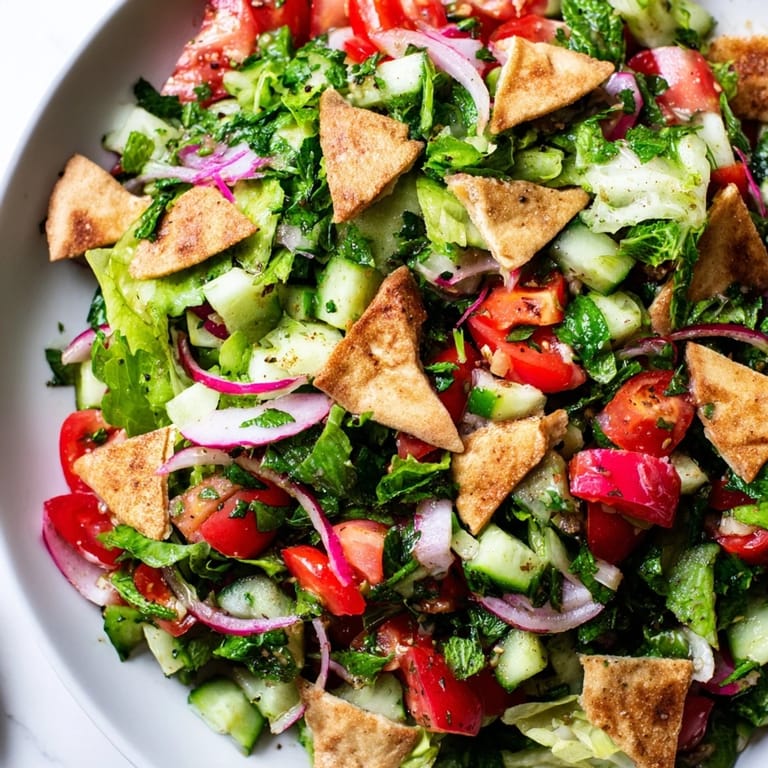
Save My first fattoush happened by accident on a humid summer afternoon when I was scrambling to pull together lunch for friends dropping by unexpectedly. I had a handful of vegetables wilting in the crisper drawer, some pita bread going stale, and a half-remembered conversation about Lebanese food from years before. Something clicked—I cut up everything I could find, crisped those pita pieces in the oven, and made a dressing that was mostly instinct. When I tossed it all together and tasted that first bite, the brightness of the sumac hit me like opening a window after months of being inside.
I've made this salad at least a dozen times since then, and the moment it became real for me was when my neighbor tasted it and asked for the recipe before even finishing her bowl. She'd grown up eating fattoush in Beirut, and I was nervous—how could my improvised version hold up? But she smiled and said it reminded her of her grandmother's kitchen, which might be the highest compliment I've ever received in my own kitchen.
Ingredients
- Mixed greens (romaine, arugula, or purslane): 2 cups, chopped—Pick whatever feels freshest at your market; purslane adds a pleasant crunch and slight tang if you can find it.
- Tomatoes: 2 medium, diced—Ripe ones matter here; if they're mealy or pale, the whole salad suffers.
- Cucumber: 1 large, diced—Leave the skin on for color and nutrients; if it's watery, seed it lightly first.
- Radishes: 4, thinly sliced—They stay crisp and add a peppery snap that balances the herbs.
- Red onion: 1 small, thinly sliced—The raw bite mellows slightly as it sits, so don't hold back.
- Fresh parsley: ½ cup, chopped—Use flat-leaf if you can; it has more flavor than curly.
- Fresh mint: ¼ cup, chopped—This is the ingredient that makes people say 'what is that?' in the best way.
- Pita bread: 2 pieces—Day-old pita works even better than fresh because it crisps up faster.
- Olive oil: 5 tbsp total (2 for chips, 3 for dressing)—Good olive oil is worth the splurge; it changes everything.
- Sea salt: ½ tsp for chips, plus ½ tsp in dressing—Taste as you go; salting is personal.
- Fresh lemon juice: 2 tbsp—Squeeze it fresh; bottled misses the brightness.
- Red wine vinegar: 1 tbsp—It rounds out the tartness without overpowering.
- Ground sumac: 1 to 1½ tsp—This is the secret weapon; it's lemony and earthy at once.
- Garlic clove: 1, minced—One is usually perfect, but if you love garlic, go for 1½.
- Freshly ground black pepper: ¼ tsp—Freshly ground makes a noticeable difference.
Tired of Takeout? 🥡
Get 10 meals you can make faster than delivery arrives. Seriously.
One email. No spam. Unsubscribe anytime.
Instructions
- Prep your pita into crispy gold:
- Heat your oven to 375°F and cut the pita into bite-sized squares or triangles—don't overthink the size. Toss them in olive oil and salt, spread them on a baking sheet in a single layer, and slide them in for 8 to 10 minutes until they're golden and crisp; they'll keep crisping as they cool, so pull them out just before they feel fully done.
- Assemble your vegetable base:
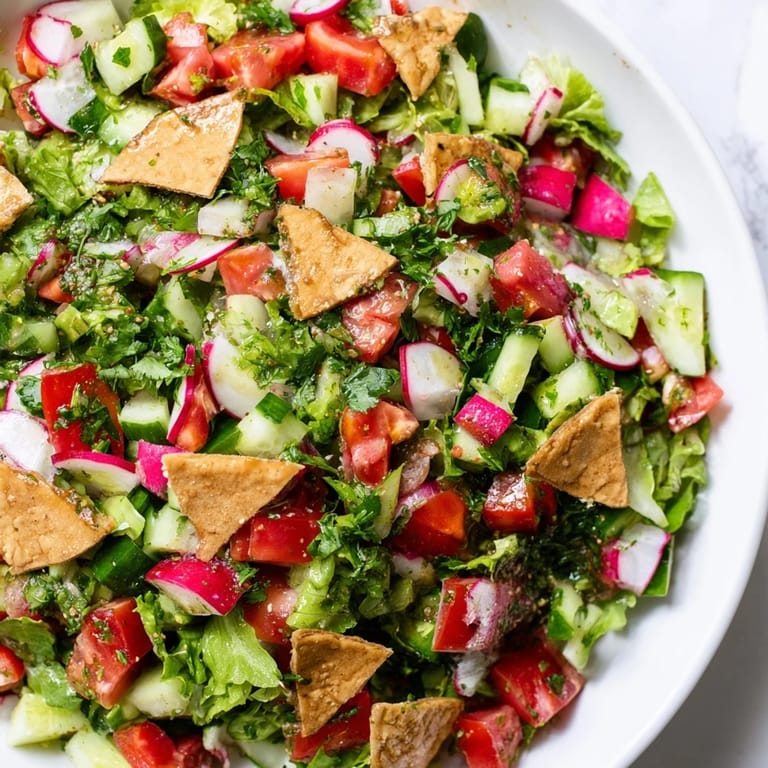
- Chop everything and pile it into your largest salad bowl—the greens, tomatoes, cucumber, radishes, red onion, parsley, and mint. At this point it looks more like a garden than a salad, but trust it.
- Build the dressing:
- In a small bowl, whisk together the olive oil, lemon juice, vinegar, sumac, minced garlic, salt, and pepper until it's smooth and the oil and acid have become friends. Taste it and adjust—if it's too sour, add a pinch more oil; if it's flat, a little more sumac wakes it up.
- Bring it all together:
- This is the moment that matters: add the pita chips to the salad just before serving and immediately pour the dressing over everything. Toss gently but thoroughly so the dressing reaches every leaf and vegetable.
- Taste and serve right away:
- Take a forkful and see if the seasoning feels right to you; if not, adjust. The crunch of the pita chips only lasts a few minutes, so eat it while it's alive.
 Save
Save There's a moment in summer when I stopped thinking about fattoush as a recipe and started thinking of it as a conversation—a way of saying 'let's slow down and taste something together.' That's when you know you've found something worth making again and again.
The Sumac Secret
Sumac is a dried spice made from the berries of a Middle Eastern shrub, and it has this tart, slightly fruity flavor that's somewhere between lemon and pomegranate. Unlike lemon juice, which can make a salad taste sharp and one-dimensional, sumac brings depth—it's got earthiness underneath the tang. I learned this the hard way when I tried to make fattoush without it once and ended up with a salad that just tasted sour. Now I know that sumac isn't an optional flourish; it's the backbone of the whole thing.
Variations That Actually Work
Once you've made this salad a few times and it feels like second nature, you can play. I've added diced bell peppers, green onions, and even some shaved cabbage for extra crunch. One time I added pomegranate seeds and it turned into something almost festive. The key is respecting the balance—don't overcrowd the bowl, and make sure any additions are crisp and fresh. If something sits in the dressing too long, it softens and the whole thing falls apart.
Serving and Storage
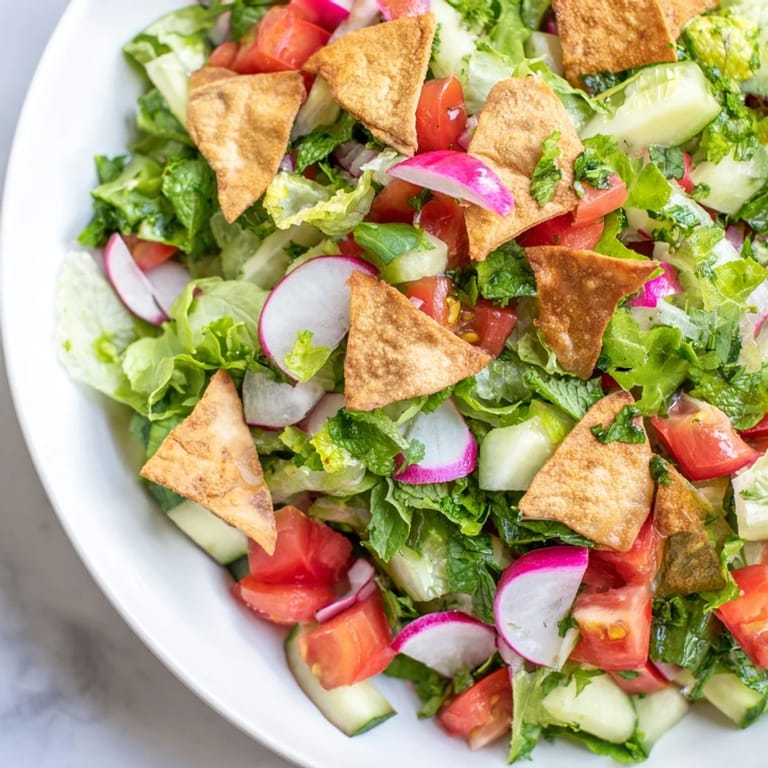
Fattoush is meant to be eaten immediately, the moment the dressing touches the greens and before the pita chips soften. You can prep everything ahead of time—wash your greens, chop your vegetables, make your dressing, and toast your pita chips. Keep the salad components and dressing separate until the last minute, and the whole meal comes together in seconds. If you have leftovers (which rarely happens), store the dressing separately and the vegetables in an airtight container; the pita chips, though, are gone.
- Make the dressing up to a day ahead and let the flavors settle in the fridge.
- Toast the pita chips a few hours before and keep them in an airtight container so they stay crispy.
- Chop your vegetables and store them in the coldest part of your fridge so everything stays bright and snappy.
 Save
Save This salad has become my answer to 'what should we eat?' on nights when you want something light but still feel nourished. It's proof that the simplest ingredients, when treated with a little care and assembled with intention, can taste like something special.
Recipe Questions & Answers
- → What makes sumac important in this salad?
Sumac adds a tangy, lemony flavor that brightens the dressing, giving the salad its characteristic Middle Eastern zest.
- → Can I use gluten-free pita for the chips?
Yes, gluten-free pita or omitting the chips works well to accommodate dietary needs without sacrificing crunch.
- → How do I keep the pita chips crunchy?
Bake pita pieces until golden and crisp, then cool completely before tossing to prevent sogginess in the salad.
- → What herbs are best for authentic flavor?
Fresh parsley and mint provide aromatic freshness that complements the vegetables and dressing perfectly.
- → Can I prepare the dressing in advance?
Yes, whisking the dressing ahead allows the flavors to meld. Add it just before serving to maintain freshness.
- → Is this suitable for vegan and dairy-free diets?
Absolutely. All ingredients including olive oil and fresh veggies fit vegan and dairy-free guidelines.