 Save
Save I discovered The Hanging Gardens at a friend's dinner party where the appetizer table seemed to defy gravity itself. Fresh vegetables and cheeses were perched on tiered stands like edible architecture, and I watched guests abandon their wine glasses to pick and dip instead. That night, I realized that how food is presented can be just as memorable as its taste. The casual beauty of it stuck with me for weeks, and when I finally attempted my own version, I understood why it works so well: it invites people to play with their food without apology.
The first time I made this for a casual gathering, I was nervous about whether the presentation would actually matter to people busy with conversation. Within minutes, the tiered arrangement became the focal point of the room, and I watched someone's skeptical expression transform as they reached for a goat cheese ball and realized how intentional every placement felt. Even the accidents worked—when a strawberry rolled slightly off its stand, it looked even more inviting, like the garden was alive and generous.
Ingredients
- Cherry tomatoes: Halve them so guests can eat them in one bite without the juice running down their chin.
- Baby carrots: Trim the greens down to about an inch so they look neat and the proportions feel intentional.
- Cucumber slices: Cut them on a slight bias so they catch the light and feel more sophisticated.
- Radishes: Slice thin enough to be delicate but thick enough not to break when picked up.
- Snap peas: Leave them whole so guests can hold them like little handles.
- Endive leaves: These are your scoops and your foundation—arrange them so they lean slightly forward.
- Seedless grapes: A sweet surprise among the savory vegetables that guests always comment on.
- Strawberries: Cut them in halves so they show off their interior and feel like a treat.
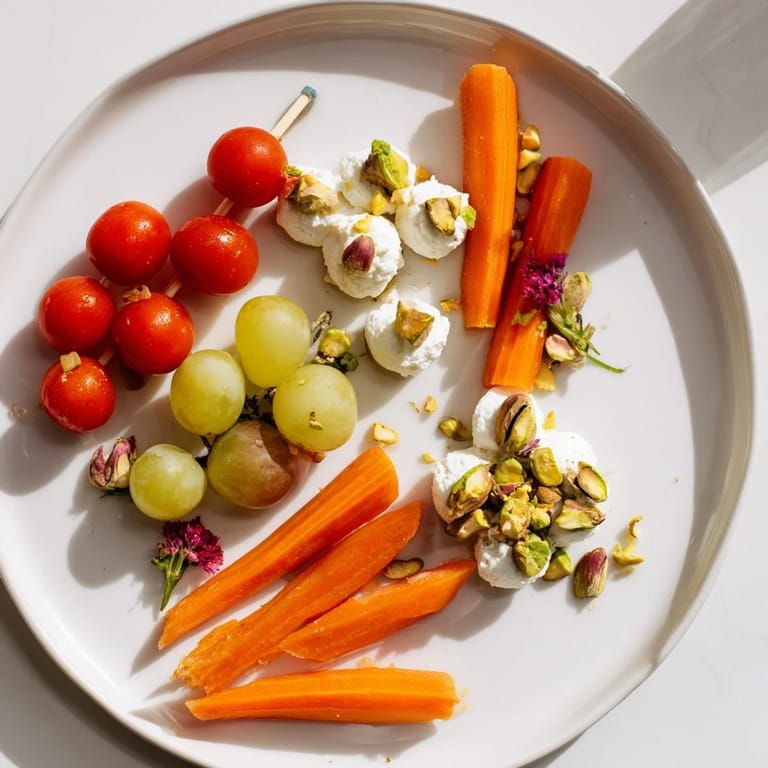
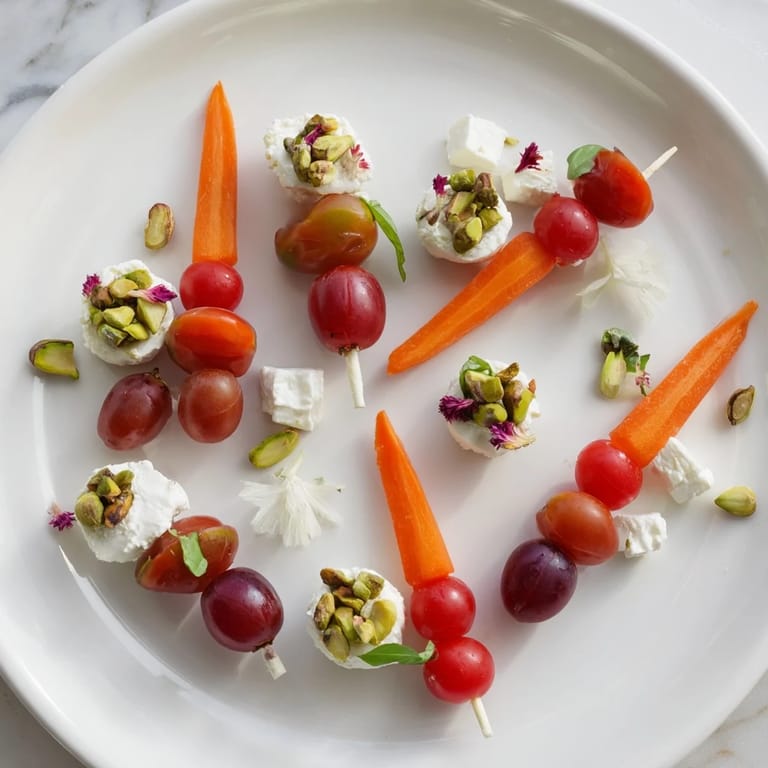
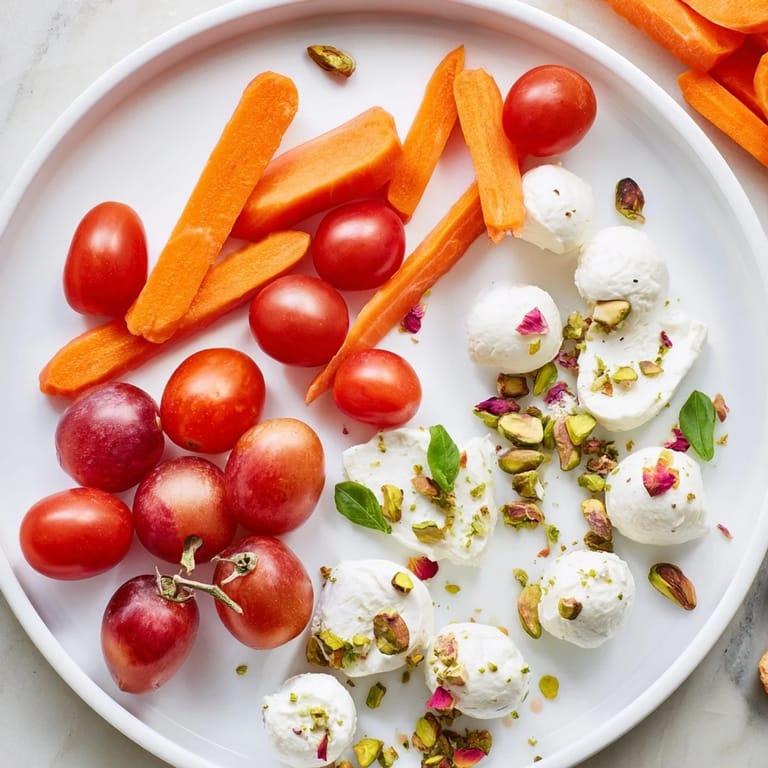
- Goat cheese: Shaping it into small balls takes patience, but each one becomes edible jewelry on the display.
- Feta: Cut into cubes just large enough to pop in your mouth alongside a vegetable.
- Hummus: Its creamy pale tone contrasts beautifully with the bright vegetables.
- Tzatziki: This cool, tangy dip is the anchor that ties everything together.
- Pesto: Its rich green becomes a visual anchor in the arrangement.
- Toasted pistachios: Toast them yourself if possible—the smell alone tells guests something special is happening.
- Fresh basil leaves: Sprinkle these last so they stay perky and fragrant throughout the meal.
- Edible flowers: If you can find them, they transform this from appetizer into art.
- Extra virgin olive oil: A light drizzle adds shine and sophistication without drowning anything.
- Sea salt and black pepper: Season boldly at the last moment so flavors stay bright.
Tired of Takeout? 🥡
Get 10 meals you can make faster than delivery arrives. Seriously.
One email. No spam. Unsubscribe anytime.
Instructions
- Prep everything first:
- Wash and dry all produce, then arrange it on clean paper towels. This step takes discipline but prevents soggy vegetables and gives you a moment to see what you have before arranging. The drier things are, the longer they'll look fresh on the table.
- Create your cheese components:
- Roll goat cheese gently between your palms into balls about the size of walnuts, then cube the feta with a sharp knife. As you work, taste a piece of cheese to remind yourself what flavors you're building toward.
- Build your elevation:
- Arrange mini-stands and small bowls at different heights on your platter. Step back and look at the negative space—you want peaks and valleys, not a flat landscape.
- Start with structure:
- Place endive leaves as your foundation, fanning them out so they cup toward the center. They're forgiving and visually stunning, so they can anchor your whole arrangement.
- Layer in the colors:
- Distribute vegetables thoughtfully, letting some cascade down from higher stands and others nestle into bowls. Think of warm tones on one side and cool greens on another for visual balance.
- Add the treasures:
- Scatter goat cheese balls and feta cubes throughout, letting them sit slightly proud so they catch light. These are the jewels of your garden, so give them real estate.
- Position your dips:
- Tuck small bowls of hummus, tzatziki, and pesto strategically so guests can reach them without dismantling your arrangement. A small spoon in each one signals that they're there to enhance the experience.
- Finish with garnish:
- Sprinkle pistachios and basil leaves where you see gaps, then add edible flowers if using. The goal is lush abundance, like a garden that's just overflowing.
- Final seasoning and shine:
- Drizzle lightly with olive oil and finish with flakes of sea salt and cracks of black pepper. Taste a piece of something and adjust as you go.
 Save
Save I remember my grandmother watching me arrange my first version and quietly saying, 'This is how food should be eaten—with your hands and your eyes both.' She was right. There's something almost meditative about reaching for something beautiful, and in that moment, eating becomes slower and more present. That's when I understood this wasn't really about the ingredients; it was about creating an excuse for people to linger.
Creating Height and Drama
The difference between a platter and The Hanging Gardens is elevation. Invest in a few tiered stands, or get creative with small bowls turned upside down under a cloth or board—even coffee mugs work. When things sit at different heights, guests see the whole display at once instead of just the perimeter. I learned this the hard way when my first attempt lay flat as a pancake and looked more like a salad than an event. Now I always step back and count at least three distinct levels before I call it done.
Adapting to What's Seasonal
Winter calls for roasted beets, pomegranate seeds, and hardy greens. Spring begs for tender peas and young radishes. Summer is your time to show off fresh berries and the first tomatoes. I keep this arrangement loose on purpose—it's designed to work with whatever looks best at the market that week. The formula stays the same: vegetables, fruit, cheese, dips, and garnish. The cast of characters changes, and somehow it always feels fresh.
Serving and Storage Wisdom
Serve this immediately after assembly so everything looks its absolute best. If something sits for more than an hour, vegetables lose their snap and cheeses warm up. I've learned to tell guests exactly what's available before they dig in, so they understand they can dip endive in hummus or pair a strawberry with goat cheese—sometimes people need permission to play.
- If you're making this more than an hour ahead, keep components separate in the fridge and assemble just before serving.
- Leftover dips last three days, but vegetables are best used within a day of cutting.
- This works beautifully with gluten-free crackers or toasted bread on the side if your guests want more substance.
 Save
Save This arrangement taught me that presentation isn't pretentious—it's an act of generosity. When you take time to make something beautiful, you're essentially telling guests they're worth the effort. Every time I arrange The Hanging Gardens now, I'm reminded that hospitality tastes better when it looks like you care.
Recipe Questions & Answers
- → What ingredients are used in The Hanging Gardens?
Fresh cherry tomatoes, carrots, cucumbers, radishes, snap peas, endive, grapes, strawberries, goat cheese, feta, hummus, tzatziki, pesto, pistachios, basil, edible flowers, olive oil, salt, and pepper.
- → How is the arrangement created for visual appeal?
Using mini-stands and bowls of varying heights, fruits, vegetables, cheeses, and dips are artfully distributed to create a lush, overflowing garden effect.
- → Can this dish be adapted for different diets?
Yes, it is naturally vegetarian and gluten-free but can be customized with cured meats for non-vegetarian preferences and paired with gluten-free crackers.
- → What dips complement this fresh arrangement?
Hummus, tzatziki, and pesto are paired with the display to add creamy, herbaceous, and tangy flavors enhancing the fresh produce.
- → Are there any allergen considerations?
This dish contains dairy from cheeses and tzatziki, nuts from pistachios and pesto, and possible sesame in hummus; check all labels carefully.
- → What’s a good beverage pairing for this dish?
A crisp Sauvignon Blanc or sparkling water with lemon complements the fresh and vibrant flavors of the arrangement.