 Save
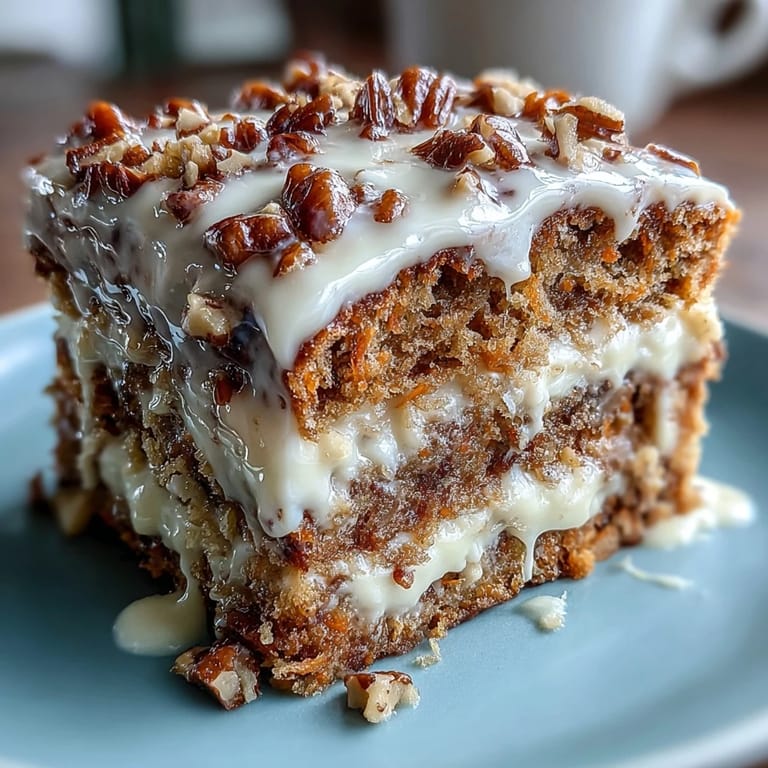
Save My neighbor brought over a slice of carrot cake one April afternoon, still warm, the cream cheese frosting barely set, and I bit into it expecting the usual dense, oil-logged texture I'd always associated with the cake. Instead, it was impossibly moist but light, the walnuts adding this wonderful crunch, and the spices—cinnamon, nutmeg, ginger—sang without overwhelming the fresh carrot flavor underneath. She mentioned it was her grandmother's recipe, tweaked over decades, and something about that lineage of small improvements made me determined to master it myself.
I made this for a Easter brunch last year, and watching my brother's face when he realized it was carrot cake—and then his immediate "wait, this is actually good"—reminded me why I bother with three pans instead of just making a sheet cake. There's something about layered cakes that feels celebratory, like you're saying this moment is worth the extra thirty minutes of assembly.
Ingredients
- All-purpose flour (2 1/2 cups): Use the spoon-and-level method or weigh it; too much flour is the quickest way to turn this into a dense brick.
- Baking powder and baking soda (2 tsp and 1 1/2 tsp): They work together here—don't skip the baking soda or you'll lose the tender crumb.
- Cinnamon, nutmeg, and ginger (1 tsp, 1/2 tsp, 1/2 tsp): These proportions create warmth without spice-cake overkill; fresh spices make a noticeable difference.
- Eggs (4 large, room temperature): Cold eggs won't emulsify properly with the oil, so pull them out while you preheat the oven.
- Granulated and brown sugar (1 1/2 cups and 1/2 cup): The brown sugar adds moisture and depth; don't substitute it entirely with granulated.
- Vegetable oil (1 cup): Oil creates a more tender crumb than butter would; olive oil is too flavored, so stick with neutral.
- Applesauce (1/2 cup): This is the secret—it replaces some fat while keeping everything moist and prevents the dense texture you might expect.
- Vanilla extract (2 tsp): The good stuff matters here; cheap vanilla tastes tinny against the spices.
- Grated carrots (3 cups): Grate them finely so they distribute evenly; if they're too chunky, you'll get dry pockets in the finished cake.
- Walnuts (1 cup chopped): Toast them lightly before adding if you have time—it deepens their flavor.
- Cream cheese and butter for frosting (16 oz and 1/2 cup): Both must be softened to room temperature or the frosting will be lumpy.
- Powdered sugar (4 cups, sifted): Sifting prevents grainy frosting; don't skip this step even though it's annoying.
Tired of Takeout? 🥡
Get 10 meals you can make faster than delivery arrives. Seriously.
One email. No spam. Unsubscribe anytime.
Instructions
- Set the stage:
- Preheat your oven to 350°F and grease three 8-inch round pans, then line the bottoms with parchment—this prevents sticking and makes turning out the layers almost foolproof. If you only have two pans, you can bake in batches, though the first layers will cool while you wait for the third.
- Combine your dry goods:
- Whisk flour, baking powder, baking soda, cinnamon, nutmeg, ginger, and salt in a medium bowl; this distributes the leavening agents and spices evenly. Do this before you mix the wet ingredients so everything is ready to go.
- Build the wet base:
- In a large bowl, beat eggs with both sugars until the mixture lightens in color and thickens slightly—this takes about two minutes and incorporates air that helps the cake rise. Add oil, applesauce, and vanilla, then mix until smooth and cohesive.
- Bring wet and dry together:
- Add the dry ingredients to the wet ingredients in two additions, stirring gently just until no flour streaks remain—overmixing develops gluten and toughens the cake. The batter should look thick and slightly lumpy.
- Fold in the vegetables and nuts:
- Gently fold in the grated carrots and chopped walnuts using a spatula, taking care not to deflate the batter or crush the walnuts. The batter should now be studded throughout and look ready to bake.
- Fill and bake:
- Divide batter evenly among the three prepared pans—a kitchen scale or ice cream scoop helps ensure they bake at the same rate—and smooth the tops lightly. Bake for 30 to 35 minutes, or until a toothpick inserted in the center comes out clean with just a few moist crumbs clinging to it.
- Cool with patience:
- Let cakes rest in their pans for 10 minutes—this helps them set without cracking—then turn out onto wire racks to cool completely. This takes about an hour, and rushing this step will cause the frosting to melt into the warm cake.
- Make the frosting:
- Beat softened cream cheese and butter together until smooth and creamy, then gradually add sifted powdered sugar, vanilla, and salt, beating until light and fluffy. If the frosting seems too soft, chill it for 15 minutes before assembling.
- Stack and frost:
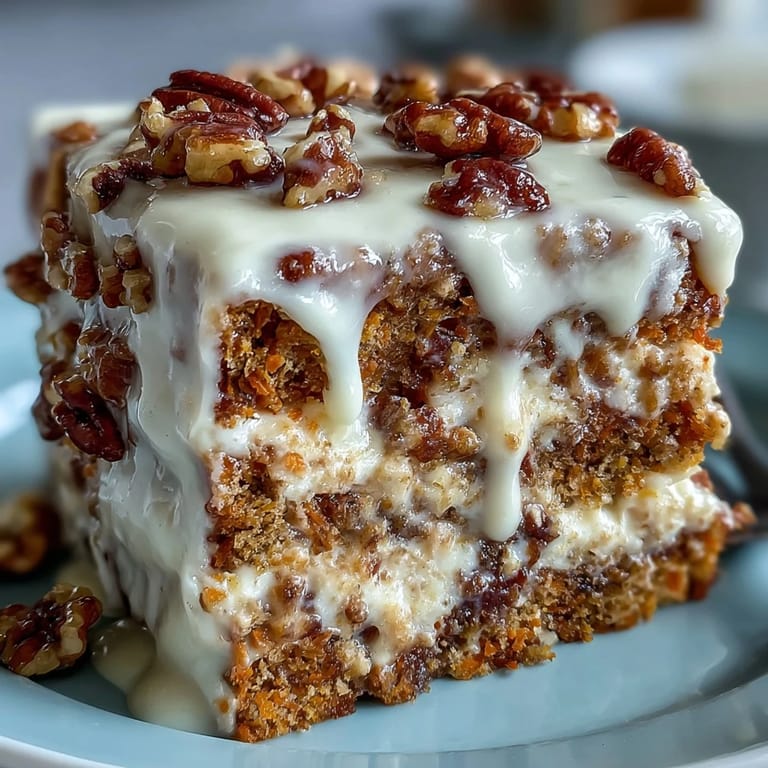
- Place the first cooled layer on your serving plate, spread with a thin even layer of frosting, then repeat with the second and third layers. Frost the top and sides generously, smoothing it out with a spatula or bench scraper if you have one.
- Decorate and rest:
- Top with chopped walnuts and edible flowers or carrot curls if desired, then refrigerate for at least 30 minutes before slicing. This sets the frosting and makes cutting cleaner layers.
 Save
Save A few months after that Easter brunch, my brother's girlfriend asked for the recipe because she wanted to make it for her parents, and I realized that somewhere between my first attempt and that moment, I'd stopped thinking of this as someone else's grandmother's cake and started claiming it as my own. There's something about nailing a recipe that feels like a small mastery, especially one this beautiful.
Why Three Layers Matter
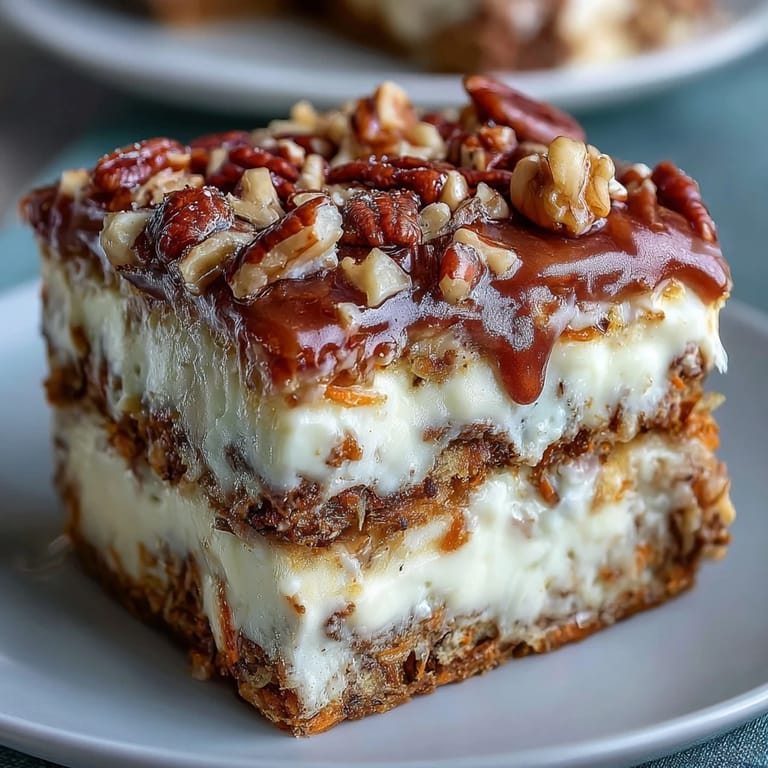
The three-layer structure isn't just for show—it fundamentally changes how you experience the cake. With two layers, you're biting through mostly cake to get to the frosting; with three, every forkful has a decent chance of hitting that tangy cream cheese element that makes the whole thing work. I've made this as a two-layer cake when I was short on time, and while it was still good, something about the ratio felt off, like the cake was drowning out the frosting instead of dancing with it.
Substitutions and Variations
The base recipe is flexible enough to bend without breaking. I've added 1/2 cup of raisins when I had them on hand, and the moisture they bring actually improved the crumb; dried pineapple works beautifully too if you want something less expected. A pinch of cardamom in place of half the nutmeg tilts the spice profile in an exciting direction, though I'd test this on a smaller batch first if you're hosting something important.
Timing and Make-Ahead Wisdom
This cake actually improves when you make it a day ahead—the spices meld, the carrots distribute their moisture more evenly, and the whole thing tastes more cohesive. The frosting stays stable for three days in the refrigerator, and the unfrosted layers can be wrapped and frozen for up to a month if you're planning ahead for an upcoming celebration. I've pulled them out on a quiet Tuesday afternoon, frosted them fresh, and felt like I'd cheated the system in the best way possible.
- Bring the cake to room temperature for about an hour before serving so the frosting softens and the flavors open up.
- If you need to transport this cake, keep it in a cake box and add a frosting dam (a piping border) to keep the layers from sliding.
- Leftover slices keep covered at room temperature for two days or refrigerated for four, though they're best within the first 48 hours.
 Save
Save This cake tastes like spring and celebration in every bite, and it's the kind of dessert that makes people pause and ask for the recipe. Make it once and you'll find yourself making it again.
Recipe Questions & Answers
- → How do I ensure the cake stays moist?
Incorporating ingredients like vegetable oil and unsweetened applesauce helps retain moisture, while careful mixing prevents overworking the batter.
- → Can I substitute walnuts with other nuts?
Yes, pecans or almonds can be used for a different crunch and flavor profile, but walnuts complement the spices best.
- → What is the best way to achieve even layers?
Divide the batter equally among pans and smooth the surface before baking to ensure uniform thickness and even cooking.
- → How long should the cake cool before frosting?
Let the layers cool completely on a wire rack, about an hour, to prevent the frosting from melting.
- → Can the cake be prepared ahead of time?
Yes, it can be made a day ahead and refrigerated; bring it to room temperature before serving for optimal flavor and texture.