 Save
Save There's something about the sound of sizzling vegetables hitting a hot pan that still makes me pause, even after cooking fajitas a dozen times. Years ago, a friend showed up unannounced on a weeknight, hungry and skeptical about my cooking skills, so I threw together whatever was in my crisper drawer and the spice cabinet. Twenty-five minutes later, we were wrapping charred peppers and tender chicken in warm tortillas, and she asked for the recipe before dessert. That night taught me that the best meals don't require hours or complicated techniques—sometimes they just need good ingredients, high heat, and a sheet pan.
I made these for my partner's coworkers during a casual dinner party, and I remember being nervous because fajitas feel fancy but also weirdly casual—like I wasn't sure if I should apologize for how simple they were. Instead, people went back for thirds and kept asking me about the spice blend. That moment stuck with me: sometimes the most impressive thing you can do is let good ingredients shine without overcomplicating them.
Ingredients
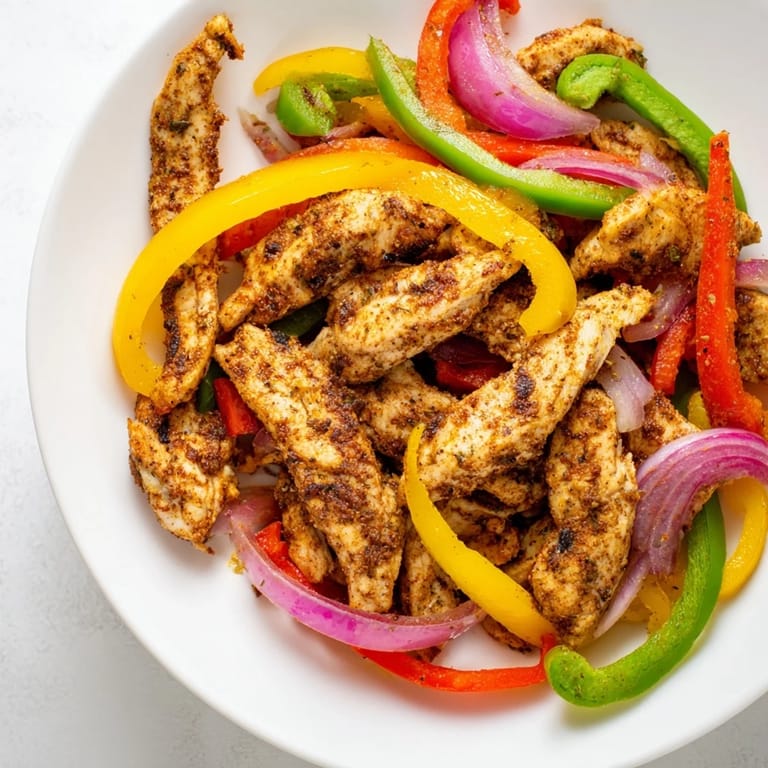
- Boneless, skinless chicken breasts (1 ½ lbs): Cutting them into thin, uniform strips is the secret—thinner pieces cook faster and soak up the spices better.
- Chili powder: This is what gives the whole pan its warm, layered heat; don't skip it thinking black pepper will do the same thing.
- Ground cumin and smoked paprika: These two together are the backbone of authentic-tasting fajitas; they create depth that makes people wonder what your secret ingredient is.
- Garlic powder and onion powder: These aren't cheating—they distribute flavor evenly through the marinade in a way fresh garlic can't in such a short time.
- Bell peppers (red, yellow, green): The different colors aren't just pretty; they have subtly different levels of sweetness, and using all three creates a more interesting flavor profile.
- Red onion: Unlike regular onions, red onion softens beautifully without turning to mush, and it adds a slight sweetness that complements the spices.
- Lime juice: Fresh lime is non-negotiable here; it's what keeps the whole dish from tasting heavy and adds brightness that ties everything together.
- Tortillas: Warm yours ahead of time or right before serving—cold tortillas will cool down your fajitas and feel sad in your hands.
Tired of Takeout? 🥡
Get 10 meals you can make faster than delivery arrives. Seriously.
One email. No spam. Unsubscribe anytime.
Instructions
- Heat your pan and prepare the stage:
- Get that sheet pan in a 425°F oven while you're prepping ingredients—you want it hot enough that the vegetables will actually caramelize, not steam. Lining with parchment or foil saves you from the scrubbing that makes fajitas feel less like a victory.
- Build your flavor foundation:
- Whisk together the oil, spices, salt, pepper, and lime juice in a bowl big enough to coat everything evenly. This marinade isn't long and luxurious—it's just long enough to let the spices bloom, which is why the ratios matter.
- Coat the chicken:
- Toss the chicken strips into the marinade and make sure every piece gets covered; the spices won't distribute themselves. If some pieces are thicker than others, they'll cook unevenly, so try to cut them roughly the same size.
- Arrange on the pan:
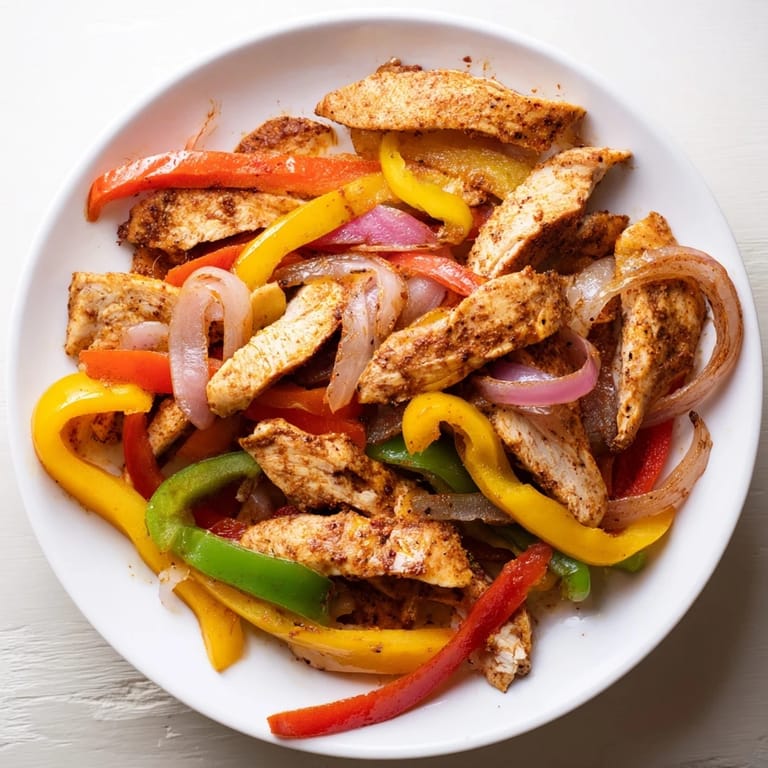
- Spread everything—chicken, peppers, and onion—in a single layer so each piece can make contact with the hot pan. If you crowd the pan, they'll steam instead of roast, and you'll miss out on those caramelized edges that make this dish special.
- Roast and stir:
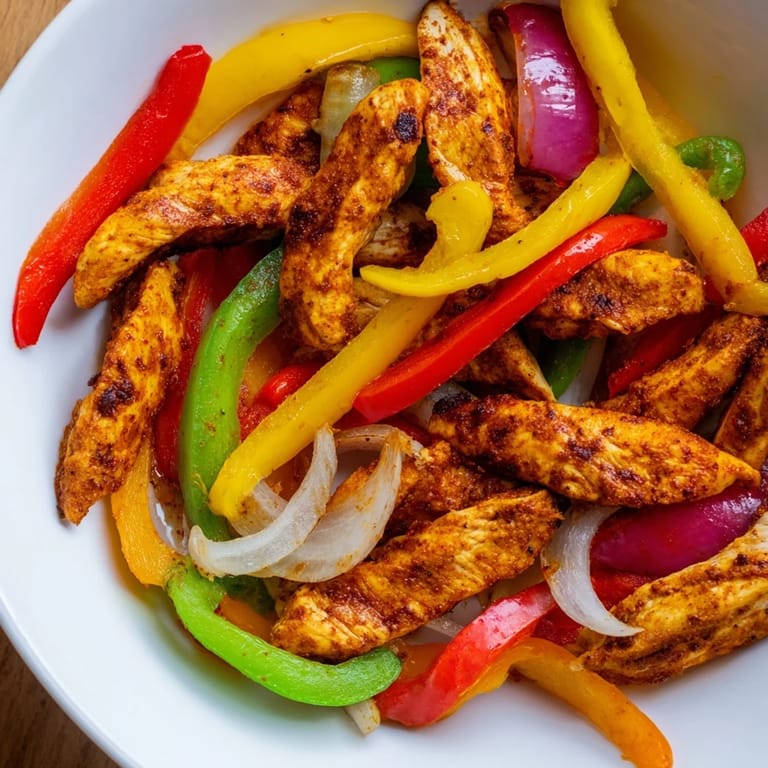
- After about 12 minutes, give everything a stir to make sure nothing's sticking and to rotate pieces for even cooking. The total time is 20–25 minutes, and you'll know it's done when the chicken is opaque all the way through and the peppers have some golden-brown spots.
- Serve while everything is still hot:
- Transfer to a serving platter or eat straight from the pan if you're in a casual mood. The warmth of the fajitas will soften the tortillas just enough to wrap around everything without tearing.
 Save
Save The moment fajitas became more than just dinner for me was when my 8-year-old nephew started assembling his own plate, trying different combinations and actually tasting them instead of just eating. He mixed sour cream with cilantro, added way too much lime, and decided it was perfect. Watching someone experience food that way, without all the adult overthinking, reminded me why I love cooking—it's an invitation to try things and figure out what you like.
Timing Is Everything
This recipe lives and dies by execution speed—the whole thing takes 40 minutes, but most of that is just roasting. The actual hands-on time is maybe 10 minutes: chopping, mixing, spreading, done. What this means for you is that fajitas are perfect for nights when you want something that tastes like effort but doesn't eat up your time. I usually prep my peppers and chicken in the morning if I know I'm making these for dinner, which makes the evening part feel effortless.
Making It Your Own
The base recipe is delicious, but the real fun starts when you start treating it like a template instead of a rulebook. I've made these with shrimp for a lighter version, with sliced steak when I wanted something more substantial, and with thick-sliced portobello mushrooms for a friend who doesn't eat meat. Each version tastes completely different because the vegetables and spices adjust to whatever protein you pair them with. The framework works because the spice blend is strong enough to carry any protein, and the roasting method is forgiving enough to handle variations in cooking time.
The Sides and Extras
Fajitas are a build-your-own kind of meal, which means the toppings matter more than you'd think. Fresh cilantro adds brightness and cuts through richness, lime wedges add acidity that makes each bite taste sharper, and avocado brings a creaminess that balances the spices. I skip the sour cream most of the time, but if you add it, thin it out a little with lime juice so it doesn't feel heavy. The key is not overthinking it—just put small bowls of toppings on the table and let people build whatever sounds good to them.
- Warm your tortillas directly over a gas flame for 10 seconds per side if you want them to have a slight char and more flexibility.
- If avocado isn't in the budget, a dollop of plain yogurt mixed with a little lime juice gives you similar creaminess.
- Leftover fajita filling is great over rice the next day or stuffed into a quesadilla with cheese.
 Save
Save This recipe has stayed in my regular rotation because it works on nights when I'm tired, when I have unexpected guests, and when I want to cook something that tastes intentional without feeling stressful. That's the real measure of a good recipe.
Recipe Questions & Answers
- → What type of chicken is best for this dish?
Boneless, skinless chicken breasts cut into strips work well to ensure even cooking and tenderness.
- → Can I substitute the bell peppers?
Yes, you can use other colorful peppers or even add sliced jalapeños for extra heat.
- → How do I achieve tender vegetables without overcooking the chicken?
Roast everything together for 20-25 minutes, stirring halfway to allow even caramelization without drying out the protein.
- → What sides pair well with this dish?
Warm tortillas, rice, or fresh salad greens complement the flavors and add balance to the meal.
- → Are there options for dietary restrictions?
Use corn tortillas for a gluten-free option and omit sour cream or substitute with a dairy-free alternative to make it dairy-free.