 Save
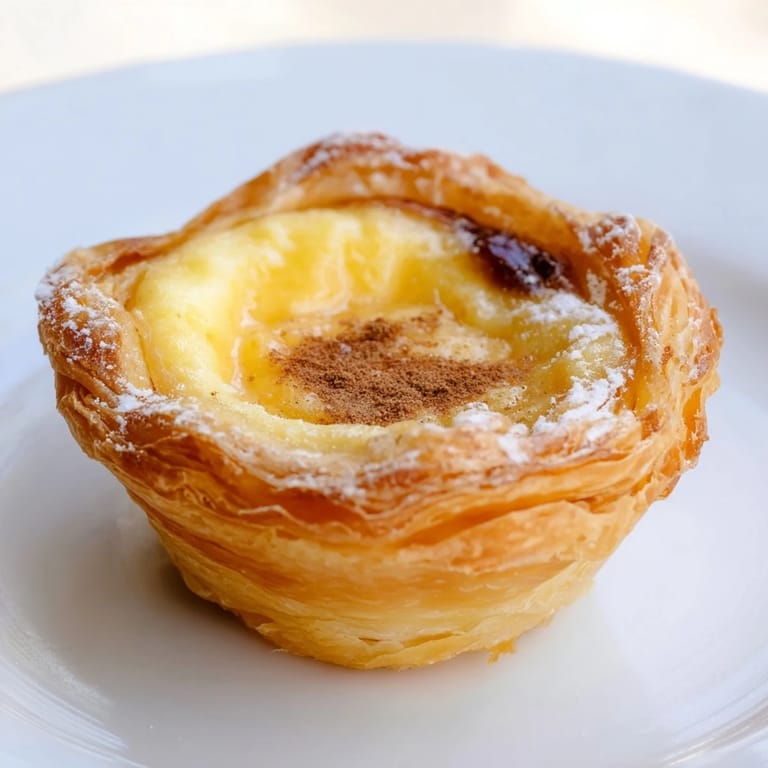
Save The first time I bit into a Portuguese egg tart at a small café in Lisbon, I was completely unprepared for how the crispy phyllo shell would shatter between my teeth, giving way to silky, cinnamon-scented custard that seemed almost too delicate to be real. Years later, I decided to recreate that moment in my own kitchen, and what started as an ambitious Sunday project became something I make whenever I want to feel like I'm sitting on a sun-drenched Portuguese patio. The magic is in the contrast—those wafer-thin, buttery layers against the velvety filling, finished with just a whisper of cinnamon and powdered sugar. Now these tarts are my secret weapon for impressing people, and honestly, for spoiling myself.
I remember bringing a batch of these to a friend's dinner party on a rainy Friday night, and watching everyone's faces light up when they bit into one was better than any compliment I could have received. Someone asked if they were homemade, and when I said yes, the table went quiet for a moment before erupting in questions. That's when I knew this recipe was worth keeping close and sharing freely.
Ingredients
- Phyllo pastry (12 sheets): This tissue-thin dough is the foundation of everything—buy it fresh if you can, and if using frozen, thaw it slowly in the fridge the night before so it doesn't crack and shatter on you.
- Unsalted butter, melted (60 g / 4 tbsp): The butter is what makes phyllo golden and crispy, so don't skip brushing between each layer; it makes all the difference in texture.
- Whole milk (250 ml / 1 cup): Whole milk gives the custard richness without overwhelming it; lower-fat versions tend to taste thinner and less satisfying.
- Cornstarch (2 tbsp): This is your thickening agent, and it's gentler than flour because it won't make the custard grainy or heavy if you whisk constantly.
- Heavy cream (125 ml / ½ cup): This luxurious ingredient is what makes the filling taste like something from a pastry shop instead of a school cafeteria.
- Granulated sugar (100 g / ½ cup): The sweetness should be subtle enough that you still taste the custard, so resist the urge to add more unless you like things very sweet.
- Egg yolks (4 large): Yolks create that silky texture that makes these tarts sing; don't use whole eggs because the whites will make the filling less creamy.
- Pure vanilla extract (1 tsp): Real vanilla matters here because it's one of only a handful of flavors, so cheap extract will be noticeable in the final result.
- Ground cinnamon (½ tsp in filling, 1 tsp for topping): Cinnamon is the soul of these tarts—warm, comforting, and unmistakably Portuguese.
- Salt (pinch): A tiny pinch brings out all the other flavors and prevents the filling from tasting flat or one-dimensional.
- Powdered sugar (2 tbsp for topping): This adds a final touch of elegance and sweetness; sift it just before serving so it doesn't clump.
Tired of Takeout? 🥡
Get 10 meals you can make faster than delivery arrives. Seriously.
One email. No spam. Unsubscribe anytime.
Instructions
- Get your oven ready:
- Preheat to 200°C (400°F) so it's hot and ready when you need it; a properly heated oven is what gives the phyllo that golden, crispy finish you're after.
- Build the phyllo cups:
- Brush each phyllo sheet generously with melted butter, then stack three sheets together and cut into squares large enough to fit your muffin cups—think of it like you're building delicate pastry armor. Press each stack gently into the cups, smoothing out any wrinkles but not tearing the paper-thin layers.
- Par-bake the shells:
- Bake the phyllo cups for 8–10 minutes until they're just barely golden and still slightly flexible; they'll crisp up more once cooled. Remove them carefully because they're fragile at this stage.
- Make the custard:
- In a medium saucepan, whisk together milk and cornstarch until completely smooth—any lumps here will end up in your custard, so take a moment to really break them down. Add the cream, sugar, egg yolks, vanilla, cinnamon, and salt, whisking constantly to keep the yolks from scrambling.
- Cook until silky:
- Place the saucepan over medium heat and whisk without stopping for about 5–7 minutes until the custard thickens enough to coat the back of a spoon; you'll feel the resistance change as it goes from thin to velvety. Once it reaches this point, remove it from the heat immediately because overcooking will break the custard.
- Fill and bake:
- Divide the warm custard among the cooled phyllo cups, filling them almost to the rim but not quite—they'll puff up slightly as they bake. Return them to the oven for 8–10 minutes until the custard is just set but still has a slight jiggle in the center when you tap the tin.
- Finish with finesse:
- Let the tarts cool for just a few minutes, then dust generously with cinnamon and powdered sugar; this simple finishing touch transforms them from homemade to café-quality.
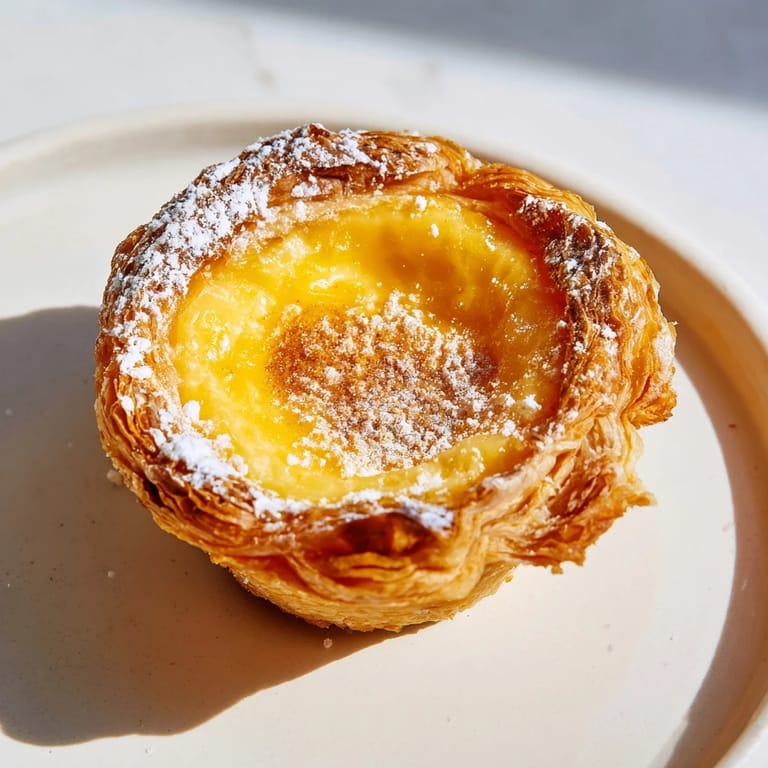 Save
Save There was a moment last summer when my neighbor stopped by, took one bite, and asked if I'd been hiding culinary school from her. We ended up sitting on the back steps eating these tarts straight from the cooling rack, talking about how some of the best things in life are the ones that look hard but are actually just about patience and precision. That's when these tarts stopped being just a recipe and became something I make because they genuinely bring people joy.
The Magic of Phyllo
Phyllo is intimidating until you realize it's just butter and gossamer-thin dough—the key is accepting that it will tear sometimes and embracing it as part of the charm. Each layer you brush with butter becomes crispy and golden, creating those shattering layers that make your teeth happy. The trick is not to overthink it; phyllo forgives more than you'd expect, especially once it's layered and baked.
Custard Chemistry and Why It Matters
The custard is where this recipe lives or dies, and it's because of the balance between egg yolks, starch, and heat. The egg yolks create creaminess, the cornstarch thickens without making things grainy, and the heat activates both without letting either one take over. I learned this the hard way after making a batch where I skipped the constant whisking and ended up with custard that looked like cottage cheese, which was the opposite of the goal.
Serving and Storing Your Tarts
These tarts are at their absolute best served slightly warm, when the pastry is still crispy and the custard is silky without being hot. They'll keep in the fridge for up to three days, and reheating them in a 180°C (350°F) oven for about five minutes brings back the crispness without drying them out. If you want to get ahead, you can actually freeze the baked, cooled tarts for up to a month, and they thaw beautifully.
- Serve them alongside espresso or a glass of chilled white port for that authentic Portuguese café experience.
- If you have leftover custard, don't waste it—spoon it into small glasses, chill, and eat it like a panna cotta.
- Make these when you want to feel like a pastry chef without spending your entire day in the kitchen.
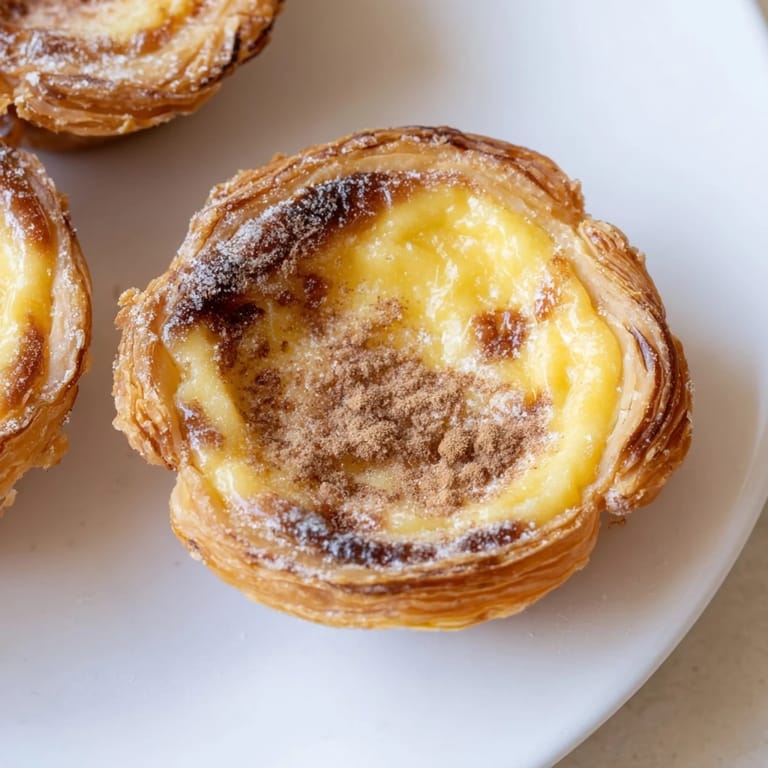 Save
Save These Portuguese egg tarts are proof that the simplest ingredients, treated with care and respect, can create something that tastes like pure luxury. Make them for someone you love, or make them entirely for yourself—either way, you're in for something special.
Recipe Questions & Answers
- → What type of pastry is used for the cups?
Thin sheets of phyllo pastry are layered and baked into crisp cups that hold the custard filling.
- → How is the custard thickened?
Cornstarch is whisked with milk, then combined with egg yolks, cream, sugar, and spices and cooked on medium heat until thickened.
- → Can these tarts be made ahead of time?
Yes, they can be baked in advance, stored chilled, and gently reheated for crispness before serving.
- → What flavoring adds warmth to the custard?
Ground cinnamon and pure vanilla extract infuse the custard with a warm, aromatic taste.
- → What is the best way to serve these tarts?
Slightly warm with a dusting of powdered sugar and cinnamon, paired well with white port or espresso.