 Save
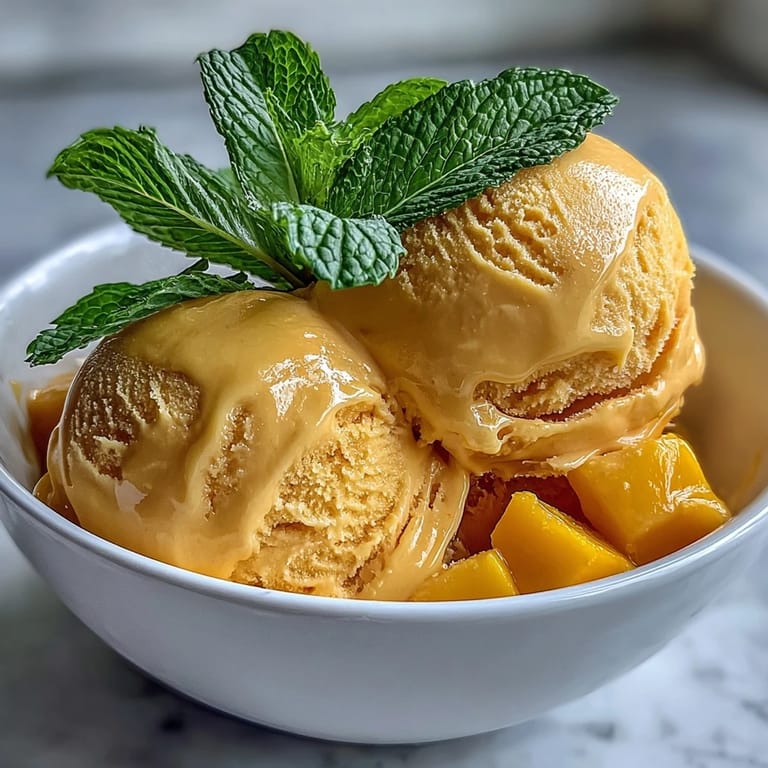
Save There's a particular afternoon I won't forget—humidity hanging thick in the kitchen, mangoes piled on the counter still warm from the farmers market, and my friend insisting that homemade sorbet couldn't possibly be this simple. Twenty minutes later, we were scraping the last spoonfuls from bowls, both of us shocked at how the blender had transformed those golden fruits into something so impossibly smooth and refreshing. That's when I realized sorbet wasn't fancy or complicated; it was just patience and good fruit doing all the work.
I made this for a dinner party once when someone casually mentioned they couldn't eat dairy, and instead of panicking, I remembered those mangoes in my fruit bowl. By dessert time, I was watching five people go quiet—that specific quiet that means something just landed right—before one person asked for seconds and another wanted the recipe immediately. It became the thing people asked me to bring, which is its own kind of compliment.
Ingredients
- Ripe mangoes (3 large, about 900 g): Choose ones that yield slightly when you press them gently, because underripe mangoes will taste stringy and bitter; overripe ones blur into mushiness. I learned this by trial and error, and now I smell them near the stem—that sweet perfume tells you everything.
- Fresh lime juice (2 tablespoons): This isn't just for tang; it lifts the mango flavor and keeps the sorbet from tasting flat or one-dimensional.
- Granulated sugar (100 g or ½ cup): Taste as you go because mango sweetness varies wildly depending on variety and season, so you might need less than you think.
- Water (120 ml or ½ cup): This keeps the texture silky rather than dense, and helps the sorbet churn properly.
- Salt (pinch, optional): A whisper of salt actually makes the mango flavor scream louder, something I discovered by accident and never went back from.
Tired of Takeout? 🥡
Get 10 meals you can make faster than delivery arrives. Seriously.
One email. No spam. Unsubscribe anytime.
Instructions
- Gather and prep your mangoes:
- Peel, pit, and dice your mangoes into chunks that fit easily in your blender. Don't overthink this step—rough chunks are fine because they're all going into a machine anyway.
- Blend until velvet:
- Add the mango, lime juice, sugar, water, and salt to your blender and go until completely smooth, stopping to scrape the sides halfway through. You're listening for that change in sound when everything shifts from chunky to liquid-silk.
- Taste and adjust:
- This matters more than you'd think because sweetness is personal and mango variety changes everything. Add more lime if it needs brightness, more sugar if it needs gentle sweetness, and taste again.
- Strain for silkiness (optional but worth it):
- Pour through a fine mesh sieve to catch any fibrous bits that might make the texture feel grainy. It's not essential, but it's the difference between good and restaurant-quality.
- Churn or hand-freeze:
- If you have an ice cream maker, follow its instructions—usually 20 to 25 minutes of churning until it's thick and creamy. If you don't, pour into a shallow freezer-safe container and every 30 minutes for about 4 hours, scrape the edges with a fork and stir vigorously; this breaks up ice crystals and keeps it fluffy.
- Serve immediately or store:
- Eat it straight from the churn while it's soft and dreamy, or transfer to an airtight container and freeze for up to 2 weeks. If it's been frozen hard, let it sit on the counter for 5 minutes before scooping so you're not wrestling with it.
 Save
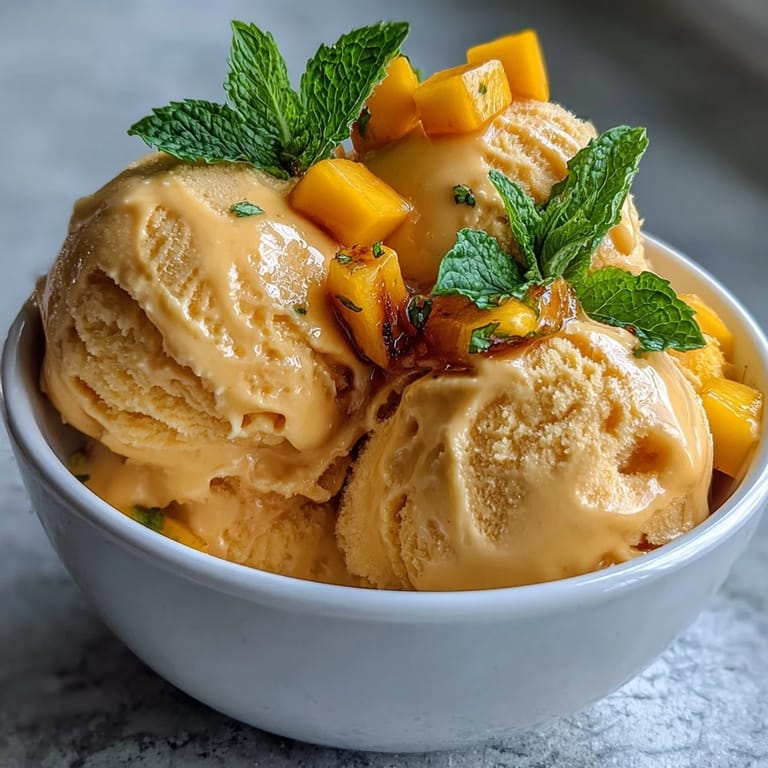
Save There was something unexpectedly tender about watching my nephew carefully scoop his own bowl of this sorbet, tongue bright orange as he ate it straight in the afternoon sun. He asked why homemade tasted different than store-bought, and honestly, it's because there's no mystery ingredient hiding in a list you can't pronounce—just fruit, sweetness, and the thing you added yourself. That moment reminded me that simple food is often the most memorable.
The Magic of Mango Ripeness
Choosing mangoes is genuinely half the battle here, and it took me longer than I'd like to admit to stop buying based on color alone. A ripe mango has give when you hold it gently in your palm, and that sweet smell near the stem is your green light; the flesh inside should be buttery and dense with juice, not stringy or watery. Once you get this right, the rest of the recipe practically cooks itself because good fruit doesn't need much intervention.
Hand-Freezing Without Equipment
Some of my best kitchen moments have happened because I didn't have the right equipment, and this is one of them—reaching for a fork and a shallow container instead of an ice cream maker taught me something about texture and patience. The vigorous stirring breaks up ice crystals and incorporates air, which is what gives sorbet that smooth, scoopable quality rather than a dense frozen block. It takes longer than a machine, but watching it transform from liquid to fluffy suspension over those four hours feels like mild kitchen magic.
Variations and Extras
Once you understand the basic formula—fruit, sweetness, liquid, lime—you can drift in different directions without second-guessing yourself. I've added rum or vodka on nights when adults were around and the sorbet needed a softer texture that wouldn't freeze rock-solid; I've swapped honey or agave for sugar when I wanted to experiment; I've even stirred in fresh mint at the last moment and watched it surprise people.
- For an adult twist, add a tablespoon of rum or vodka before churning to keep it scoopable straight from the freezer.
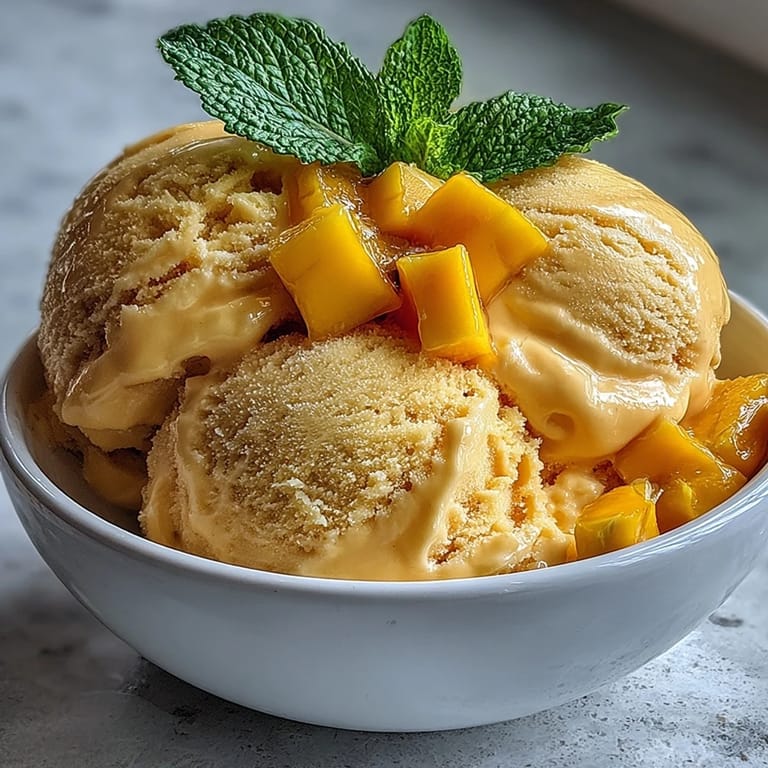
- Garnish with fresh mint, candied ginger, or extra diced mango to turn a simple bowl into something that looks intentional and cared-for.
- If you're using honey or agave instead of sugar, reduce the amount slightly because they're sweeter than granulated sugar and the sorbet's texture changes.
 Save
Save This sorbet has quietly become the dessert I reach for when I want something that feels generous without feeling complicated, something that tastes like exactly what it is. Make it once and you'll understand why homemade is the only way, from then on.
Recipe Questions & Answers
- → How do I achieve a smooth texture in mango sorbet?
Blending the mango mixture until completely smooth and optionally straining it through a fine mesh sieve helps remove fibers, resulting in a creamy texture.
- → Can I make this without an ice cream maker?
Yes, pour the mixture into a shallow container and freeze, stirring every 30 minutes to break up ice crystals until fluffy and set.
- → What sweeteners can be used as alternatives to sugar?
Honey or agave syrup can replace granulated sugar, though honey is not suitable for a vegan version.
- → How does lime juice affect the flavor?
Lime juice adds a subtle tang that brightens the natural sweetness of mangoes and balances the overall taste.
- → Can I add alcohol to the sorbet?
Adding a tablespoon of rum or vodka before freezing helps keep the texture softer and adds depth to the flavor.