 Save
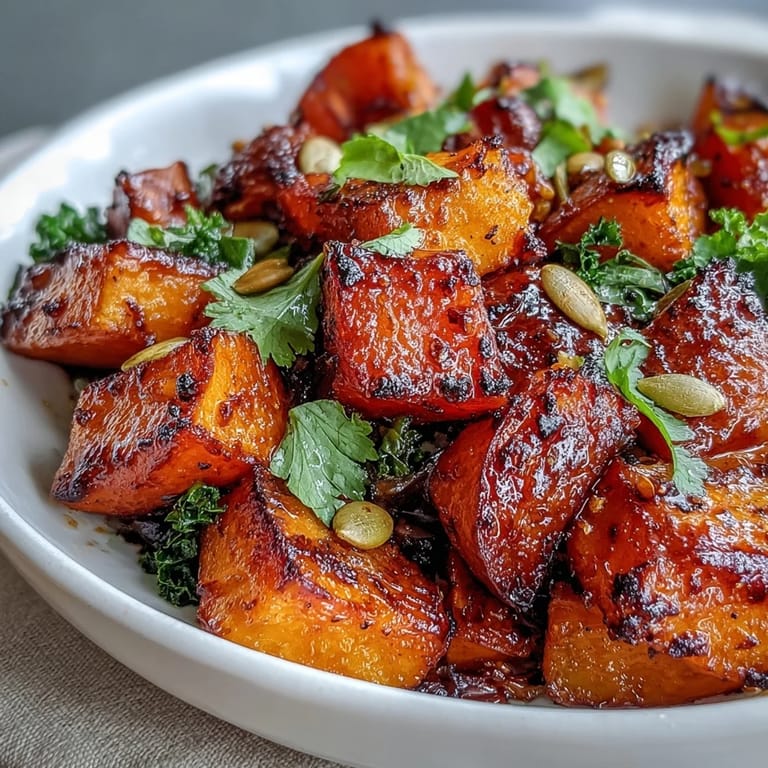
Save Last October, I was rummaging through the farmers market in that golden afternoon light when a stack of deep orange-red kuri squashes caught my eye. Something about their smooth, burnished skin made me want to roast them immediately. That evening, as the kitchen filled with warm spice smoke and caramel sweetness, I realized I'd stumbled onto something special—a bowl that tastes like autumn comfort but feels bright enough to eat year-round.
I made this for my sister right after she moved to the city, when her new apartment still smelled like cardboard boxes and uncertainty. Watching her take that first bite, fork breaking through the tender squash, and seeing her face soften—that's when I knew this recipe had crossed from my kitchen into something worth sharing.
Ingredients
- Red kuri squash: This variety has a naturally sweet, chestnut-like flavor that deepens beautifully when roasted—regular butternut works fine too, but kuri has a creamier texture that makes each bite feel luxurious.
- Red onion: The sharpness mellows into jammy sweetness as it roasts, creating little pockets of caramelized depth throughout the bowl.
- Fresh kale: Choose lacinato or curly kale and remove those tough stems—they won't soften no matter how long you cook them, and nobody wants a mouthful of woody texture.
- Smoked paprika: This is where the magic lives; it adds a whisper of campfire and complexity that regular paprika simply can't match.
- Cinnamon and cumin: Together they create a gentle warmth that feels almost Middle Eastern, grounding the sweetness without overpowering it.
- Chili flakes: Start conservative and adjust to your heat preference—the warmth should make you smile, not gasp.
- Maple syrup and apple cider vinegar: This pair is essential; the vinegar cuts through richness while maple adds that subtle caramel finish that makes people ask for seconds.
- Pumpkin seeds and fresh cilantro: These aren't just garnish—they're textural contrast and brightness that prevent the bowl from feeling heavy.
Tired of Takeout? 🥡
Get 10 meals you can make faster than delivery arrives. Seriously.
One email. No spam. Unsubscribe anytime.
Instructions
- Get your oven ready and prep your vegetables:
- Preheat to 400°F and line a baking sheet with parchment paper so nothing sticks. Cut your squash into roughly 1-inch cubes—not too small or they'll dry out, not too big or they won't caramelize properly. Slice the red onion into thick half-moons that can hold their shape.
- Coat everything in warm spices:
- In a large bowl, toss the squash and onion with olive oil, then add the paprika, cinnamon, cumin, chili flakes, salt, and pepper. The oil should coat everything evenly so no piece roasts dry—this is worth taking a moment to do thoroughly.
- Give them their first stretch in the oven:
- Spread the vegetables in a single layer on your prepared sheet and roast for 25 minutes, stirring halfway through if you remember. The squash should be starting to soften and show golden edges.
- Add the sweet-tangy finish:
- Drizzle the maple syrup and apple cider vinegar over everything and toss gently. Return to the oven for 10 more minutes until the vegetables are completely tender and slightly caramelized around the edges.
- Wilt the kale while everything roasts:
- In a skillet over medium heat or in a steamer basket, cook the chopped kale for just 2 to 3 minutes until it softens but still has a hint of spring. This keeps it bright green and tender rather than dark and tired.
- Compose your bowls with intention:
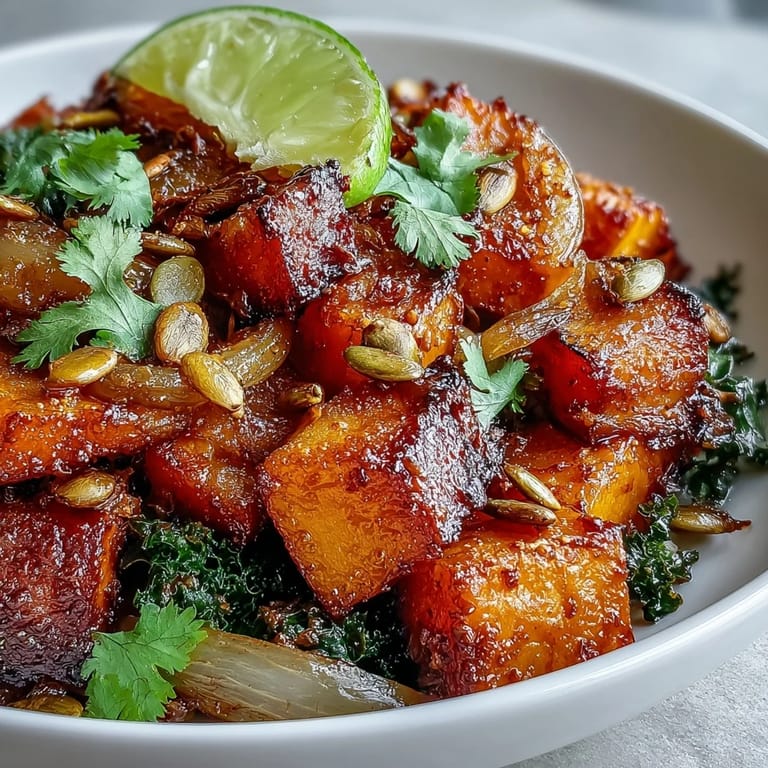
- Divide cooked quinoa (or another grain, or nothing at all) among four bowls. Layer the roasted squash and onions on top, then add the kale.
- Finish with color and crunch:
- Scatter pumpkin seeds over each bowl, add a handful of fresh cilantro, and serve with lime wedges so people can squeeze as much brightness as they want.
 Save
Save My neighbor stopped by one afternoon right after I'd finished making this bowl, and without thinking twice, I handed her a fork. We sat on the kitchen counter in comfortable silence, just eating and watching the late sun move across the floor, and that's when I understood that the best food is the kind you're willing to share without ceremony.
The Beauty of Roasting Vegetables
Roasting transforms vegetables in a way that seems almost magical—the dry heat concentrates their natural sugars, creating caramelization that brings out flavors you didn't know were hiding there. With red kuri squash specifically, the process turns something that might seem simple into something with incredible depth and richness. It's one of those cooking techniques that actually rewards you for patience and a hot oven.
Spice Building as a Practice
I used to think spices were just thrown in randomly until I started noticing how each one played a specific role. Paprika gives smoke, cinnamon adds warmth, cumin grounds everything in earthiness, and chili brings the wake-up call—none of them fights for attention, they just make each other better. Building a spice blend intentionally, rather than grabbing whatever seems right, changed how I think about seasoning everything from soups to roasted vegetables.
Serving Suggestions and Flexibility
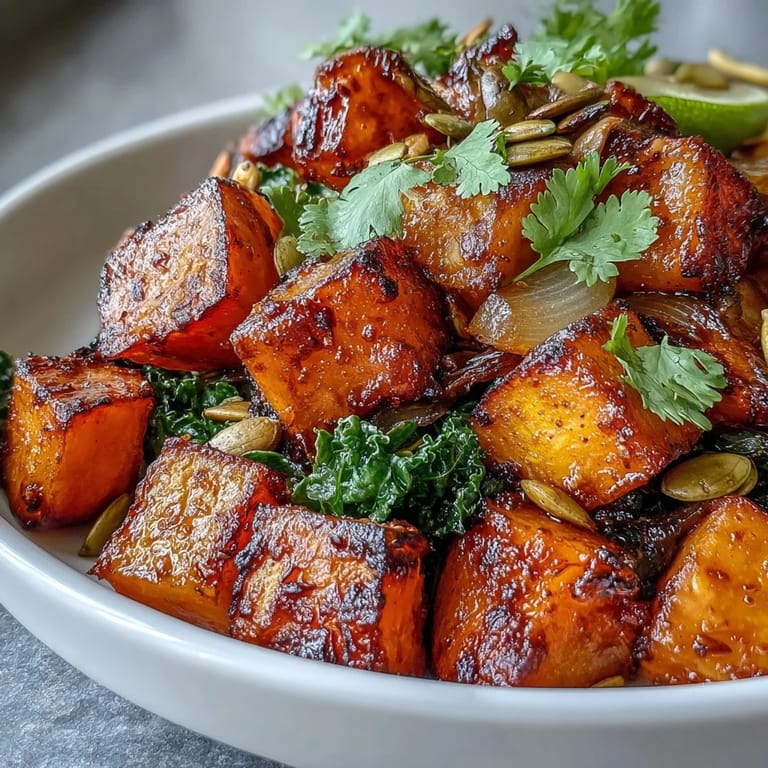
This bowl is endlessly adaptable depending on what's in your kitchen and what your body needs on any given day. I've made it with farro instead of quinoa, added roasted chickpeas for extra protein, and once even served it over a bed of brown rice when that's all I had. The core—those spiced, caramelized vegetables—remains satisfying whether you're serving it as a light dinner or a more substantial lunch.
- Roasted chickpeas or crumbled tofu add protein without weighing the bowl down.
- Swap baby spinach for kale if that's what you have, though kale's earthiness pairs especially well with the spices.
- A drizzle of tahini or a dollop of Greek yogurt on the side works beautifully if you want something creamy.
 Save
Save This bowl reminds me that some of the best meals don't require complexity, just intention and ingredients you actually care about. It's become the dish I make when I want to feel nourished without overthinking things.
Recipe Questions & Answers
- → What does red kuri squash taste like?
Red kuri squash has a sweet, nutty flavor reminiscent of chestnuts with a smooth, creamy texture. It's naturally sweeter than butternut squash and holds its shape beautifully when roasted, making it ideal for bowls and salads.
- → Can I substitute other squash varieties?
Yes, butternut squash, acorn squash, or kabocha squash work well as substitutes. Keep in mind that roasting times may vary slightly depending on the squash variety and cube size.
- → How can I make this bowl more filling?
Add protein like cooked chickpeas, grilled tofu, or roasted chicken. Serving over quinoa as suggested also adds substantial protein and makes it a complete meal. You could also add a dollop of Greek yogurt or tahini drizzle.
- → Is this dish spicy?
The chili flakes provide mild warmth that balances the sweetness from maple syrup and squash. Adjust the amount based on your heat preference—the dish is designed to be sweet and spicy rather than hot.
- → How long will leftovers keep?
Store components separately in airtight containers for up to 4 days. Reheat roasted squash and onions in the oven at 350°F for best results. Add fresh garnishes just before serving.
- → Can I prepare this ahead?
Roast the squash and onions up to 2 days in advance. Reheat before serving. Prepare the kale fresh or store wilted kale separately. Assemble bowls just before eating for the best texture and flavor.