 Save
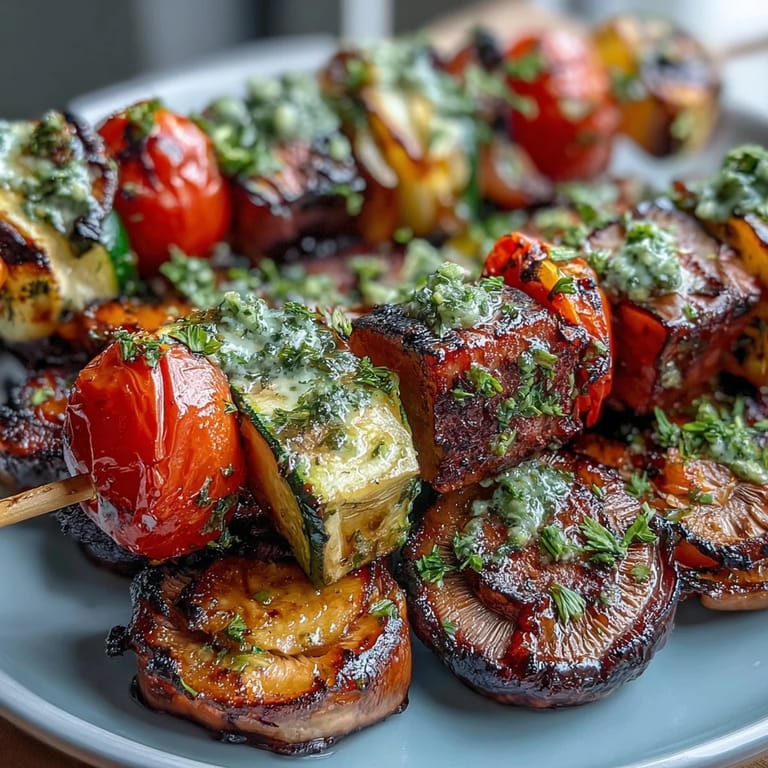
Save There's something about grilling vegetables in the height of summer that stops me mid-conversation—the way the grill's heat brings out this caramelized sweetness you'd never expect from a zucchini. My neighbor called over the fence one July afternoon asking what smelled so incredible, and when I turned those skewers and showed her the charred edges catching the light, she asked for the recipe before I'd even finished cooking. That moment taught me that the simplest ingredients, treated with intention, become the kind of food people remember.
Last summer, I made these for a potluck where everyone arrived with heavy casseroles and complicated salads, and somehow my veggie skewers were the first thing that emptied. A friend who usually skips vegetables entirely went back for thirds, which still makes me laugh when I think about it. Food has this way of surprising you when you're not trying too hard to impress.
Ingredients
- Red bell pepper: Cut into pieces roughly the size of your thumb knuckle so they soften without falling apart on the skewer.
- Yellow bell pepper: Adds sweetness and visual pop, though red or orange work beautifully too depending on what your market has looking fresh.
- Zucchini: Slice into rounds about half an inch thick so the flesh stays intact but the edges get gorgeously browned.
- Red onion: Wedges hold together better than you'd expect and develop an almost caramelized sweetness on the grill.
- Button mushrooms: They cook down slightly and absorb all that smoky flavor like little flavor sponges.
- Eggplant: Cut into inch-sized cubes so they're small enough to cook through but large enough to develop that tender interior.
- Cherry tomatoes: These feel a bit risky on skewers since they can split, but if you thread them carefully they burst into something wonderful.
- Olive oil: Use your good stuff here—the one you actually like tasting—because you'll notice it.
- Kosher salt and black pepper: Season generously because grilling requires confidence with seasoning.
- Fresh parsley and cilantro: Buy these as close to cooking as possible and chop them by hand if you have five minutes, since a food processor can turn them bitter.
- Garlic: Mince it fine so it distributes throughout the sauce and doesn't leave harsh chunks.
- Red wine vinegar: This is the backbone of the sauce, bringing acidity that makes everything else sing.
- Extra-virgin olive oil: For the sauce, use something you'd drizzle over bread, something with character.
- Dried oregano: A little goes a long way, and it pulls the whole sauce into focus.
- Red pepper flakes: Optional but worth including if you like a gentle heat that builds as you eat.
Tired of Takeout? 🥡
Get 10 meals you can make faster than delivery arrives. Seriously.
One email. No spam. Unsubscribe anytime.
Instructions
- Soak those wooden skewers:
- This step feels unnecessary until you have them catch fire on the grill, which I learned the dramatic way years ago. Thirty minutes in water means they'll char pleasantly but not ignite, and you'll actually enjoy your meal instead of performing a stovetop rescue operation.
- Get your grill ready:
- Medium-high heat is your sweet spot—hot enough that vegetables get those caramelized edges but not so aggressive that they burn before they soften inside. Let it preheat for a few minutes so you're not standing around waiting once you have skewers loaded.
- Coat your vegetables evenly:
- Toss everything together in a large bowl with the olive oil and seasoning, making sure each piece gets a thin film of oil. This is what prevents sticking and creates those beautiful charred edges you're after.
- Thread like you're building a little edible necklace:
- Alternate your vegetables for both visual appeal and even cooking—if you pile all the dense stuff together, something will be raw while something else is overdone. Push pieces close enough that they touch but loose enough that heat can get all around them.
- Grill with intention:
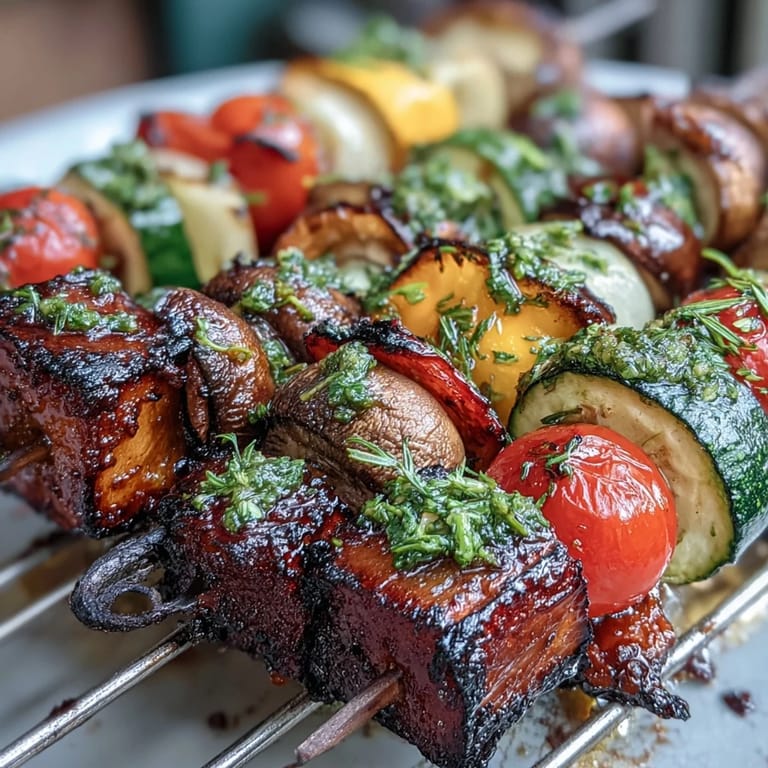
- Place skewers on the grill and resist the urge to fuss constantly; let them sit for three to four minutes before turning so the vegetables actually make contact with the heat source. You'll know they're ready to flip when they release naturally from the grill without sticking and show beautiful char marks underneath.
- Make your sauce while things are cooking:
- Combine the herbs, garlic, vinegar, and seasonings in a bowl, then whisk in the olive oil slowly so everything emulsifies together. Taste it and adjust the salt, acid, or heat level to match what your palate wants.
- Finish with generosity:
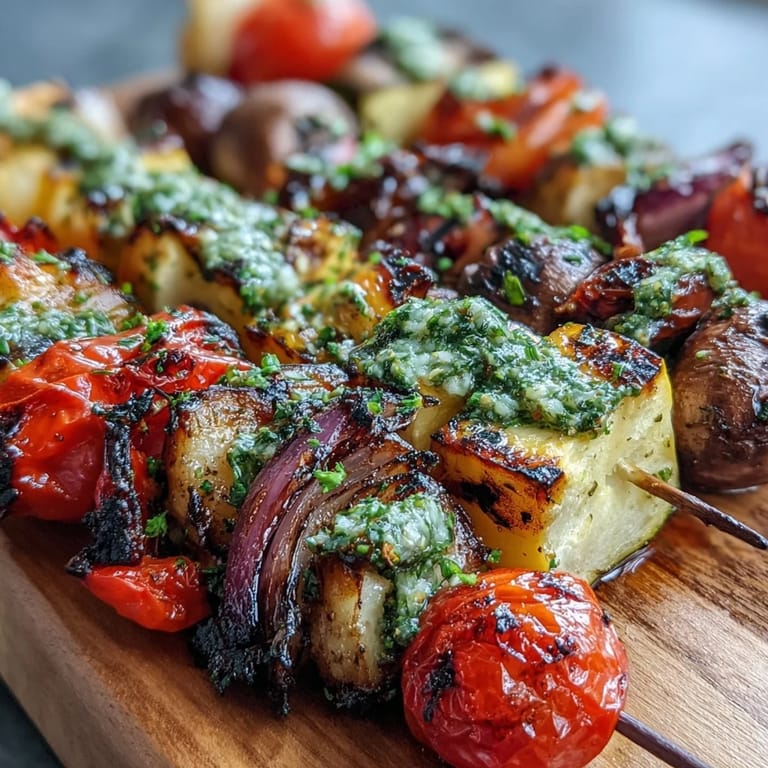
- Remove skewers from heat when the vegetables are tender enough to pierce easily but still have some structural integrity. Arrange them on a platter and drizzle the chimichurri over everything, saving extra sauce for people to add more as they wish.
 Save
Save These skewers have become my answer to the question of what to bring when someone says "just bring something light." There's dignity in a vegetable dish that doesn't apologize for itself, that stands there green and charred and vibrant, asking nothing but to be noticed.
The Secret Life of Chimichurri
Chimichurri is one of those sauces that tastes simple until you actually taste it, and then you realize you've been missing it your whole life. The magic happens when fresh herbs, garlic, and acid come together, creating something that's both bold and balanced. It doesn't stay the same—it evolves as it sits, the flavors deepening and mingling, so a sauce that tastes bright at hour one tastes even more intentional by hour three.
Why Vegetables Need Fire
There's something about the grill that wakes vegetables up in a way other cooking methods can't replicate. The direct, high heat creates contrast—tender insides against caramelized outsides—and that textural difference is what makes people pay attention. A roasted vegetable is pleasant, but a grilled vegetable feels like an event.
Building Your Own Skewer Story
The beauty of this recipe is how it adapts to whatever you have available, making it feel different each time you make it. Spring brings asparagus, summer brings zucchini and tomatoes, fall brings thicker vegetables that hold their shape better, and every season teaches you something new about timing and temperature. You'll develop your own rhythm with the grill, your own sense of when things are just right.
- Add chunks of halloumi or cubed tofu if you want your skewers to become a complete meal rather than a side dish.
- Brush skewers lightly with sauce partway through cooking if you want a deeper chimichurri flavor baked in.
- Serve these at room temperature with crusty bread and cold white wine for a meal that feels effortless but tastes considered.
 Save
Save These skewers remind me every single time that the most memorable meals often come from the least complicated recipes. There's freedom in knowing you can feed people something beautiful and delicious without a complicated ingredient list or hours at the stove.
Recipe Questions & Answers
- → What vegetables work best for grilling on skewers?
- → How do I prevent the skewers from burning on the grill?
Soak wooden skewers in water for at least 30 minutes before grilling to prevent them from burning.
- → Can I prepare the chimichurri sauce ahead of time?
Yes, chimichurri sauce tastes even better when allowed to rest for a few hours to let the flavors meld.
- → How long should vegetables be grilled for optimal tenderness?
Grill the vegetable skewers for 12 to 15 minutes, turning every few minutes until tender and lightly charred.
- → What are some protein additions to include on the skewers?
Adding marinated tofu cubes or halloumi cheese can boost protein and complement the grilled vegetables well.
- → What drinks pair well with grilled vegetable skewers?
Chilled white wines, such as Sauvignon Blanc, complement the fresh and smoky flavors perfectly.