 Save
Save I discovered this dish by accident one evening, standing in my kitchen with three different cuisines calling to me from the pantry shelves. I had Mediterranean staples on one side, Asian ingredients in the middle, and Middle Eastern spices scattered across the counter, each telling its own story of travel and hunger. Instead of choosing one path, I thought—why not walk all three at once? The result was this vibrant, clustered feast that turned cooking into a conversation between continents.
I made this for a dinner party where my guests brought their own food memories—someone's grandmother's Middle Eastern kitchen, another's first trip to Thailand, a third's summer on a Greek island. When I set down these three clusters, everyone leaned forward at the same moment, drawn by the colors and steam and scent of soy and oregano and cumin all mingling. For the first time that evening, everyone was quiet, not from politeness but from actual attention.
Ingredients
- Extra-virgin olive oil: Use a good one for the Mediterranean cluster—it carries flavor, not just fat.
- Eggplant: Dice it small so it softens quickly and drinks in the oregano.
- Red bell pepper: The sweetness balances the eggplant's earthiness.
- Zucchini: Slice it thin so it stays tender without becoming mushy.
- Cherry tomatoes: Halve them to release their juice into the pan.
- Garlic: Mince it fine so it distributes evenly and won't brown too quickly.
- Toasted sesame oil: A little goes far—use it for the Asian cluster to add depth without overwhelming.
- Shiitake mushrooms: Slice them thick enough to hold their shape through cooking.
- Snap peas: Keep them whole or halved for a crisp texture that bounces back when you bite it.
- Soy sauce: Tamari works beautifully if you need gluten-free.
- Ginger: Grate it fresh; the flavor is brighter than powdered.
- Chickpeas: Drain and rinse them well so they're not salty.
- Bulgur or quinoa: Quinoa cooks faster if time matters; bulgur absorbs spices more deeply.
- Ground cumin, coriander, and cinnamon: Toast them briefly in the oil before adding other ingredients to wake up their aromatics.
- Fresh parsley: Add it at the end so it stays bright and alive.
- Lemon juice: Squeeze it fresh just before serving to keep the Middle Eastern cluster tasting clean.
- Feta cheese: Crumble it coarse so it lands in every bite.
- Toasted sesame seeds: Buy them pre-toasted or toast them yourself—they taste like nuttiness captured in tiny form.
Tired of Takeout? 🥡
Get 10 meals you can make faster than delivery arrives. Seriously.
One email. No spam. Unsubscribe anytime.
Instructions
- Set up your three stations:
- Line up three large skillets or pans, each with its ingredients ready and waiting. This is key—once you start, things move quickly, and you won't want to scramble looking for the sesame oil while mushrooms are browning.
- Begin the Mediterranean cluster:
- Heat olive oil in the first skillet over medium heat until it shimmers slightly. Add diced eggplant and let it sit for about 3 minutes without stirring so it gets a light golden surface, then stir it around. This creates a subtle richness before you add the rest.
- Layer in the Mediterranean vegetables:
- Stir in bell pepper, zucchini, cherry tomatoes, and garlic. The kitchen will fill with oregano's warm, herbal scent almost immediately. Let everything cook together for 8–10 minutes, stirring now and then, until the vegetables are soft and the flavors have married.
- Heat and build the Asian cluster:
- In the second skillet, warm sesame oil over medium-high heat—you want it hot but not smoking. Add mushroom slices and give them 2 minutes to start releasing their moisture and developing color.
- Complete the Asian flavors:
- Add snap peas and julienned carrot, stirring constantly for about 2 minutes so everything cooks evenly. Then add soy sauce, ginger, and rice vinegar, letting everything sizzle and marry for another 2–3 minutes until the vegetables are crisp-tender and the pan smells like an Asian night market.
- Build the Middle Eastern foundation:
- In the third skillet, warm olive oil and add thinly sliced red onion, cooking gently for about 3 minutes until it softens and turns translucent. The natural sugars in the onion will start to caramelize slightly, creating a sweet base.
- Layer Middle Eastern spices and grains:
- Stir in cooked chickpeas, bulgur or quinoa, cumin, coriander, and cinnamon. Cook for about 5 minutes, stirring often so the spices coat everything evenly and the chickpeas warm through. When you're done, scatter fresh parsley over everything and squeeze lemon juice across the top.
- Arrange and serve:
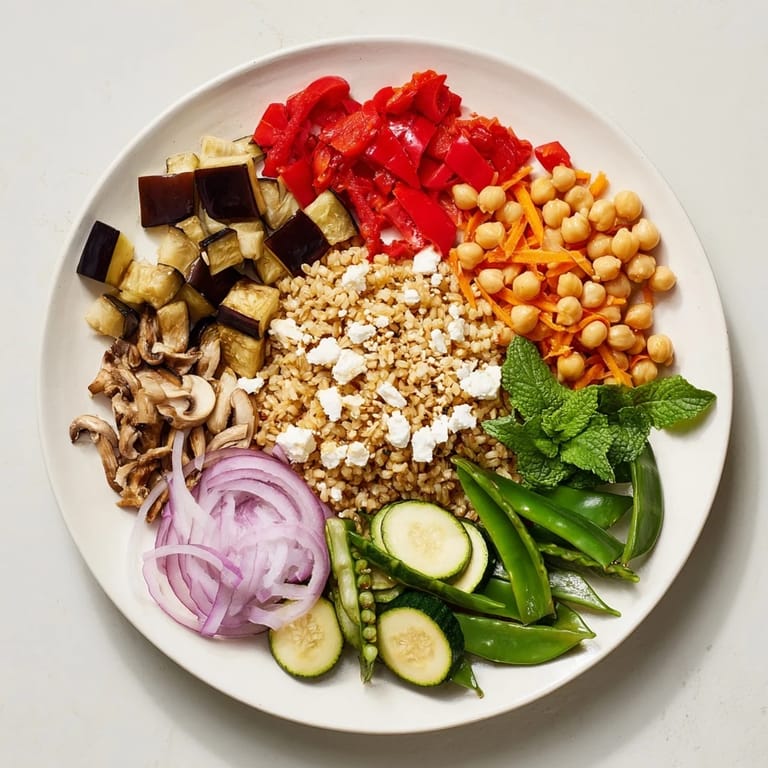
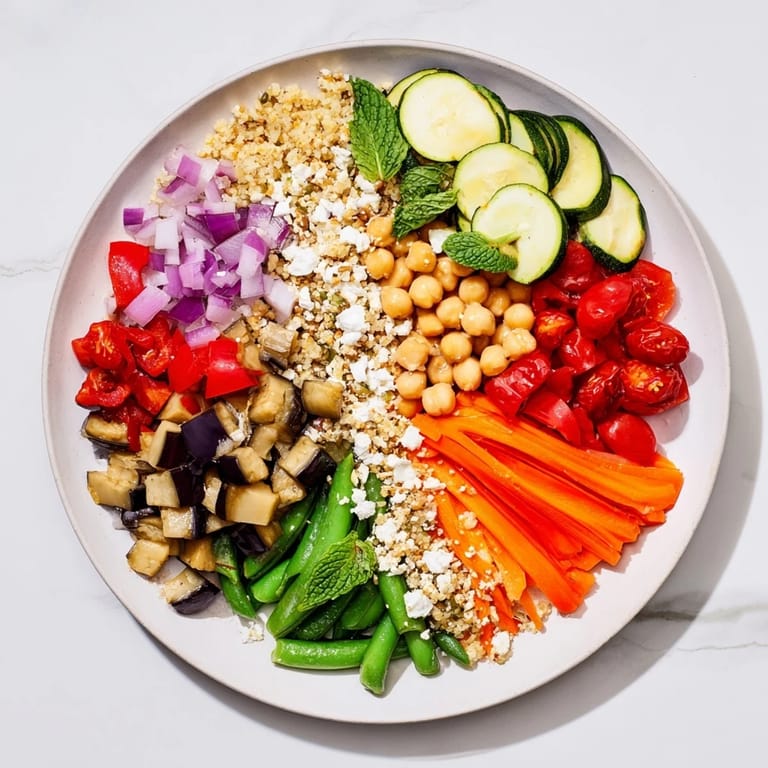
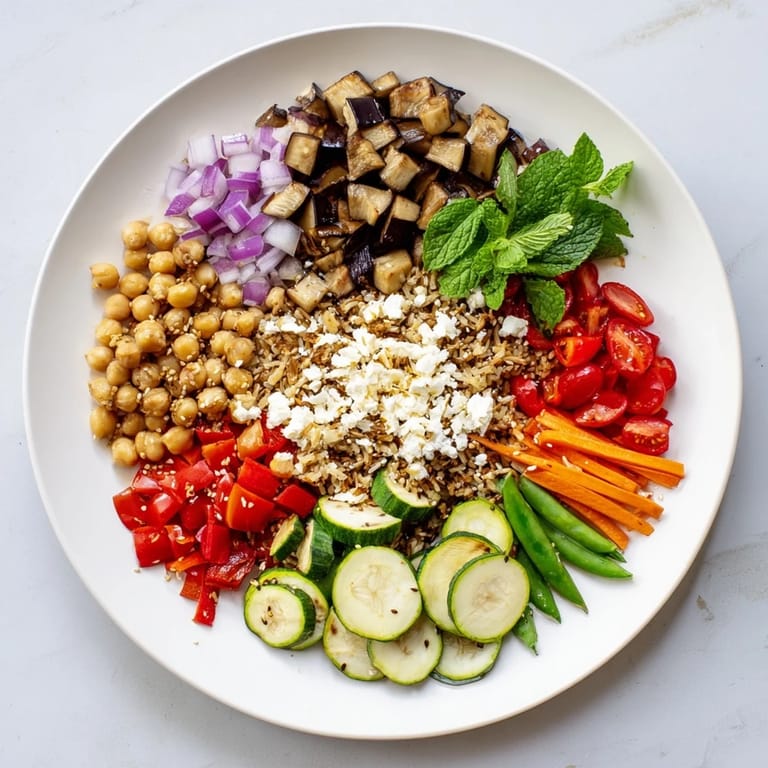
- Place each cluster side by side on a large platter or on individual plates, creating three colorful sections. Scatter feta, sesame seeds, and fresh mint or cilantro across all three clusters, letting them overlap and blend at the edges.
 Save
Save What I love most about this dish is watching people eat it—how they start cautiously, tasting each cluster separately, then gradually begin mixing them, discovering combinations they didn't expect. The plate becomes a landscape of exploration, and suddenly fusion cooking doesn't feel pretentious or forced; it feels like the natural way humans eat when we stop overthinking it.
Why Three Clusters Instead of One Big Mix
Keeping each cuisine in its own corner of the plate serves a purpose beyond visual appeal. When you cook everything separately, each cluster maintains its own identity and integrity. The Mediterranean vegetables stay bright and garlicky, the Asian vegetables stay crisp and savory-spiced, and the Middle Eastern grains stay warm and aromatic. If you mixed them all in one pan, the flavors would muffle each other, and you'd lose the pleasure of tasting their differences and discovering how they talk to each other on your palate.
Adapting This for Your Kitchen and Your Hunger
This recipe thrives on flexibility. If you don't have shiitake mushrooms, use cremini or button mushrooms; if quinoa is what you have instead of bulgur, use it without hesitation. The structure stays strong regardless of small swaps. Protein additions—grilled chicken, pan-seared tofu, roasted lamb—can nestle into any cluster without disrupting the balance, and the dish scales easily for more or fewer people by doubling or halving the amounts.
The Final Flourish
The garnishes are where this dish transforms from good to memorable. Feta brings tang, toasted sesame seeds add crunch and nuttiness, and fresh mint or cilantro lifts everything with brightness. These finishing touches aren't decoration—they're essential to how the whole thing tastes and feels in your mouth.
- If you skip the feta for vegan cooking, add a pinch more sea salt and an extra squeeze of lemon to replace that tanginess.
- Toasted sesame seeds make all the difference; untoasted seeds taste flat and slightly raw by comparison.
- Tear the fresh herbs by hand instead of cutting them so they release their oils more fully.
 Save
Save This dish is a reminder that the best meals don't come from choosing one path and following it perfectly—they come from bringing together different traditions and letting them breathe on the same plate. Serve it warm, pour something crisp to drink, and watch your kitchen become a crossroads.
Recipe Questions & Answers
- → How are the three clusters prepared?
Each cluster is sautéed separately using distinct oils and spices to preserve individual regional flavors before being served side by side.
- → Can I add protein to any cluster?
Yes, grilled chicken, tofu, or lamb can be added to enhance protein content without altering the aromatic balance.
- → What are suitable side dishes?
Flatbread or steamed rice complement the clusters well, providing a hearty base and balancing textures.
- → Are there vegan options available?
Omit the optional feta cheese to keep the dish fully vegan while maintaining its vibrant flavors.
- → Which wines pair well with these clusters?
Crisp Sauvignon Blanc or light-bodied reds like Pinot Noir complement the fresh, spiced flavors without overpowering them.
- → How can I adjust seasoning to taste?
Season each cluster with salt and pepper during cooking and adjust acidity with lemon juice in the Middle Eastern cluster as desired.