 Save
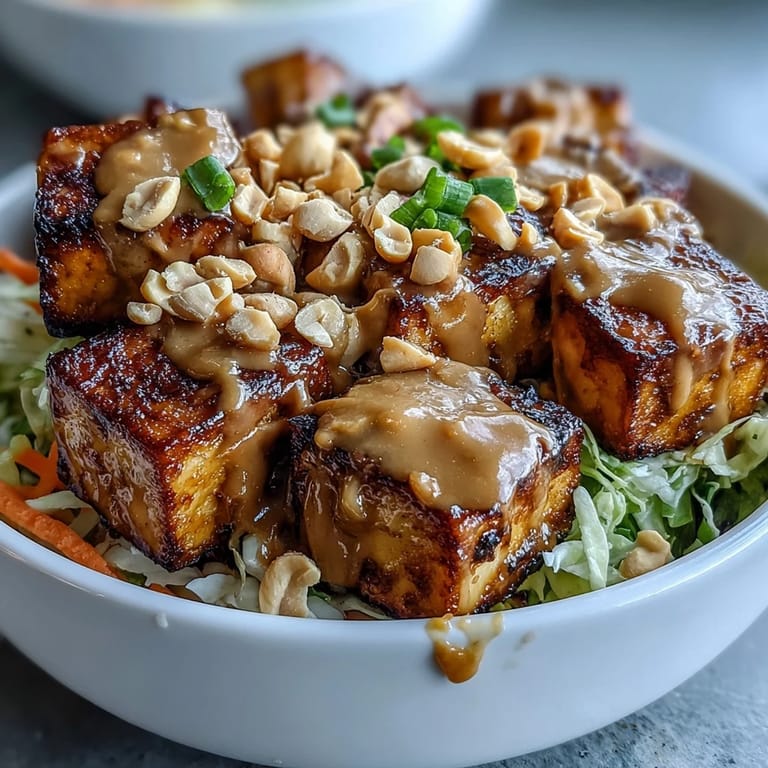
Save I stumbled onto this bowl during a chaotic Tuesday when my fridge was overflowing with half-used vegetables and I needed something substantial. My partner had just started asking more questions about plant-based eating, so I decided to prove that tofu could actually taste incredible when you treat it right. The crispy edges, the umami-rich sauce, and that satisfying crunch of fresh vegetables—it clicked immediately. We finished the entire batch in one sitting, and somehow it became our default weeknight dinner.
I made this for my sister who kept insisting she couldn't do vegan cooking, and watching her drizzle that peanut sauce over her bowl was genuinely satisfying. She kept asking if she was doing it right, and I realized the beauty of this dish—there's no wrong way to build it. Her version had extra cucumber and barely any cabbage, mine was loaded with edamame, and somehow both were perfect.
Ingredients
- Extra-firm tofu: Press it thoroughly between paper towels for at least 15 minutes—this is the secret to crispiness that actually sticks around.
- Cornstarch: This creates that golden, crackling exterior you're after; regular flour won't give you the same result.
- Brown rice or quinoa: Rice is forgiving and absorbs the sauce beautifully, while quinoa brings a nuttier texture and extra protein.
- Creamy peanut butter: The natural stuff works wonderfully, though it separates easily in the sauce.
- Soy sauce or tamari: Tamari is naturally gluten-free and tastes just as salty and complex as traditional soy.
- Toasted sesame oil: A little goes a long way—it's the ingredient that makes people ask what that incredible smell is.
- Fresh vegetables: The color is part of the pleasure here, so don't skip the purple cabbage or red pepper just because they cost slightly more.
Tired of Takeout? 🥡
Get 10 meals you can make faster than delivery arrives. Seriously.
One email. No spam. Unsubscribe anytime.
Instructions
- Cook your grain base:
- Get your rice or quinoa going first since it'll take the longest. Follow package directions, then fluff gently with a fork and let it rest while you handle everything else.
- Press and prepare the tofu:
- Wrap your block of tofu in clean kitchen towels and place it on a plate with something heavy on top—a cast iron skillet or even some canned goods work perfectly. Let it sit for 15 minutes while you gather your energy.
- Cut and coat the tofu:
- Once pressed, cut the tofu into rough cubes and toss them gently with cornstarch and salt in a bowl until they're wearing a light, even coat. This is what creates that addictive crispy texture.
- Get the tofu golden:
- If baking, spread the coated cubes on a sheet and roast at 200°C for 20–25 minutes, flipping halfway through. If pan-frying, use medium-high heat and let each side develop color before moving things around—patience is your friend here.
- Build your peanut sauce:
- While the tofu crisps, whisk together peanut butter, soy sauce, maple syrup, rice vinegar, sesame oil, minced garlic, ginger, and chili flakes with warm water. The sauce should feel silky but still pourable; add more water if it's too thick.
- Prep your vegetable rainbow:
- Julienne your carrots, slice your bell pepper and cucumber into satisfying pieces, shred the cabbage thin, and steam your edamame if they're frozen. Fresh spring onions go in last so they stay bright and crisp.
- Assemble with intention:
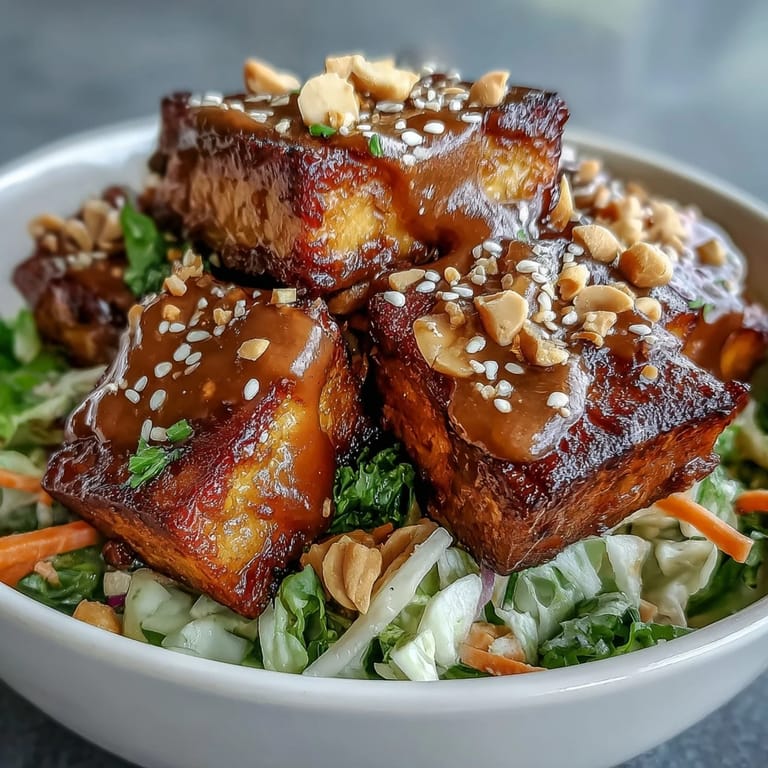
- Divide warm grain among four bowls, then arrange your tofu and vegetables on top like you're creating something beautiful. Pour the peanut sauce generously over everything, then finish with roasted peanuts, sesame seeds, and fresh cilantro or mint if you have it.
 Save
Save There's something grounding about eating from a bowl where every element has a different texture and temperature—the warm grains, crispy tofu, cool fresh vegetables, and silky sauce all coming together with each bite. It feels less like eating and more like giving yourself a gift on a random Wednesday.
Why This Sauce Changes Everything
The peanut sauce is genuinely the star, and it's because of that balance between richness and brightness. The sesame oil adds a depth that makes people think you've been simmering something for hours, while the ginger and garlic keep it fresh and alive. I've served this sauce on plain steamed vegetables and people still asked for the recipe.
Customizing Your Bowl
The beauty of this bowl is that it works with whatever vegetables your market has that week or whatever your fridge is quietly judging you for not using. I've made versions with roasted sweet potato, steamed broccoli, shredded beets, and thin slices of avocado. Each version feels different but equally satisfying, like the bowl adapts to your mood.
Making It Your Own
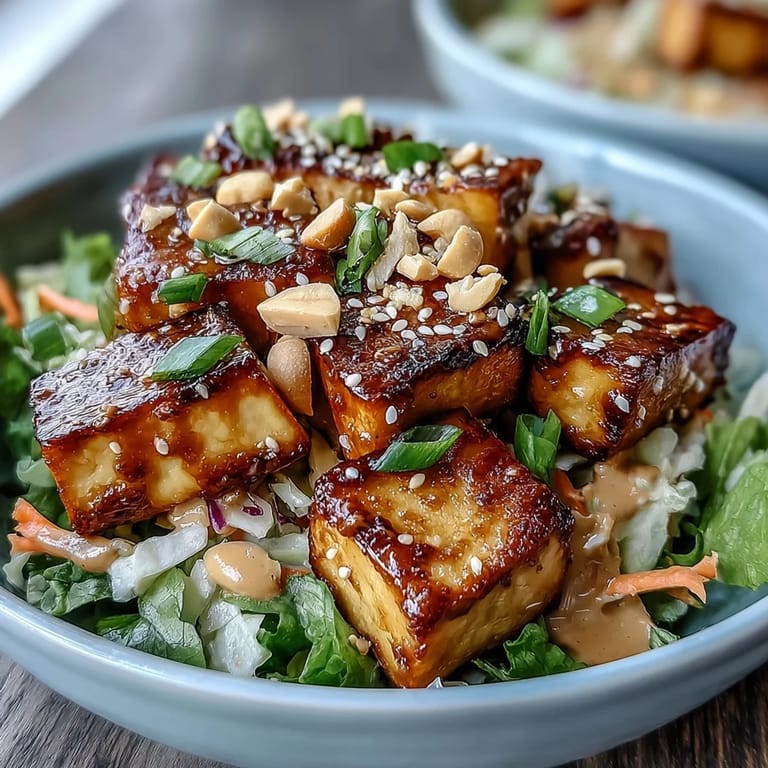
This is a formula, not a rigid law, so build it how it makes you happy. Some people make it spicy with extra chili flakes and sriracha, others keep it mild and add roasted peanuts for crunch instead. I've even made a cold version for summer, letting everything come to room temperature and calling it dinner on the patio.
- Substitute cauliflower rice for a lighter version that still feels substantial.
- Add extra vegetables you love—roasted mushrooms, blanched green beans, or thinly sliced radishes all work beautifully.
- Make the sauce thinner for drizzling or thicker for a creamy coating, depending on your preference that day.
 Save
Save This bowl has become my answer to the question of what to cook when I want something nourishing without the fuss, and somehow it never feels repetitive. It's the kind of meal that makes you feel like you're taking care of yourself, even on the nights when you're too tired to do much of anything.
Recipe Questions & Answers
- → How do I get the tofu really crispy?
Press your tofu for at least 15 minutes to remove excess moisture, then coat evenly in cornstarch before cooking. For maximum crispiness, bake at 200°C (400°F) for 20-25 minutes, flipping halfway through. Pan-frying works too—use medium-high heat and don't overcrowd the pan.
- → Can I make the peanut sauce ahead?
Absolutely. The sauce keeps well in the refrigerator for up to one week. Store in an airtight container and whisk before serving—if it thickens, add warm water one tablespoon at a time until reaching desired consistency.
- → What grains work best in this bowl?
Brown rice and quinoa are excellent choices, offering nutty flavors and satisfying textures. For lighter options, try cauliflower rice or soba noodles. Farro and bulgur also work beautifully for a hearty twist.
- → Is this bowl freezer-friendly?
For best results, freeze components separately: cooked grains and tofu freeze well for up to 3 months. Fresh vegetables and sauce are best enjoyed fresh. Thaw overnight in the refrigerator and reheat tofu in the oven to restore crispiness.
- → How can I add more protein?
Beyond tofu and edamame, consider adding roasted chickpeas, hemp seeds sprinkled on top, or swapping edamame for shelled peas. For non-vegan options, a soft-boiled egg or grilled chicken strips work wonderfully.
- → What if I have a peanut allergy?
Substitute peanut butter with sunflower seed butter, almond butter, or tahini. Each alternative provides a creamy base—adjust sweetness with additional maple syrup as needed since tahini has a stronger, more bitter flavor profile.